If you’ve ever spent time tuning a servo motor setup for a high-precision application—whether that’s a robotic arm placing tiny electronics components, a CNC mill cutting titanium, or a packaging line placing 100 bottles a minute with millimetre-perfect accuracy—you know that even the tiniest variable can derail performance. As a bearings supplier focused exclusively on servo motor bearings, I hear from customers all the time: “Why does my new motor sound rough at speed?” or “Why does my repeat positioning accuracy drop after a few weeks of use?” More often than not, the answer comes back to one deceptively simple detail: bearing clearance. Servo Motor Bearings
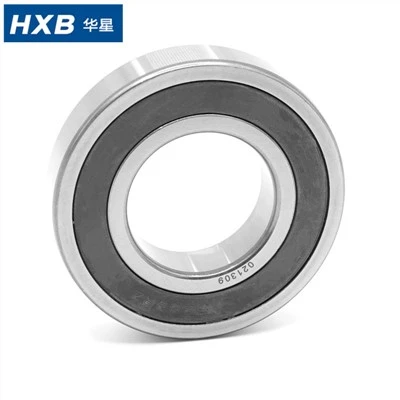
Let’s start with the basics, because there’s a lot of confusion around what bearing clearance actually is. If you picture a standard ball bearing, it’s made of an outer ring, an inner ring, a set of balls, and a cage that keeps those balls evenly spaced. Bearing clearance, sometimes called “play” or “internal clearance,” is the amount of space between the balls and the two rings when the bearing is unmounted. It’s measured in thousandths of a millimetre (or millionths of an inch, if you’re working with imperial units) and it’s set during manufacturing—think of it as a built-in tolerance that makes a huge difference in how the bearing performs inside your servo motor.
New customers are often surprised when I tell them there’s no one-size-fits-all clearance for servo motors. The clearance you need depends entirely on what your motor is doing. If you pick the wrong clearance, even the most expensive, precision-machined servo motor will underperform, or even fail prematurely. That’s why we work directly with each of our clients to match bearing clearance to their specific application, not just sell them a generic bearing off the shelf.
Let’s break down how clearance connects to servo motor performance, starting with the most critical metric: positioning accuracy. Servo motors are all about precision—they need to move to a exact position over and over again, repeatably. When a bearing has too much clearance, those tiny gaps between the balls and rings create a “slop” inside the motor. When the motor tries to stop at a set position, the excess play lets the shaft move back and forth or tilt slightly, so the final position is off by fractions of a millimetre. For applications like medical device assembly, where a robot might be placing a pacemaker component, that 0.05mm gap is enough to ruin a part. I once worked with a semiconductor manufacturing client who was seeing 0.12mm positioning error in their pick-and-place arms; swapping out bearings with standard clearance for our low-clearance servo bearings fixed the issue entirely, cutting error to under 0.02mm. That’s the kind of impact clearance can have.
Next, there’s rigidity and load handling. Servo motors aren’t always running light—many have to handle radial loads (side-to-side force) and axial loads (forward/backward force) depending on the application. Bearing clearance directly affects how much rigidity the motor has. Too little clearance, and the bearing acts like a stiff, unyielding block that can’t adjust when the motor is under load. That leads to stress on the rings and balls, increased friction, and higher operating temperatures. Too much clearance, and the shaft can deflect under load, causing misalignment between the motor and any connected equipment (like a lead screw or gearbox). Over time, that deflection wears down bearings, seals, and even the motor’s stator and rotor, leading to premature failure. We recently had a client in the packaging industry running servo motors that were failing every 8 months due to load-related deflection. Switching to our medium-clearance servo bearings—engineered to balance rigidity and flexibility under load—extended their bearing life to over 2 years, a 150% improvement.
Temperature is another big factor, especially for servo motors that run at high speeds. Bearings generate heat from friction, and that heat causes the metal rings and balls to expand. If a bearing is assembled with too much initial clearance, thermal expansion will actually reduce clearance as the motor heats up, until it’s almost zero. At that point, there’s no space for the lubricant to flow between the balls and rings, friction spikes, temperatures skyrocket, and the bearing can seize. I’ve seen this happen with high-speed spindle motors for CNC routers; operators would run the motor at 12,000 RPM for hours, and the standard clearance bearings would seize up within a year. Our high-temperature, low-clearance servo bearings are engineered with just enough initial clearance to compensate for thermal expansion, so they stay within optimal operating parameters even at 15,000 RPM for 24/7 production. On the flip side, bearings with too little clearance start out tight, but when they heat up, clearance becomes negative (meaning the balls and rings are pushing against each other with no space). That also leads to excessive friction and premature wear, so we always warn customers against picking clearance just to be “extra tight.”
Noise and vibration are often overlooked, but they’re critical for both operator comfort and equipment longevity. A servo motor that’s running rough isn’t just annoying—it’s a sign of internal stress that will shorten the life of every component connected to it. Excessive clearance in bearings lets the balls roll with uneven spacing, creating micro-vibrations that transfer through the motor shaft to gears, belts, and other parts. These vibrations also generate audible noise; for applications in clean rooms or offices where noise is a concern, that’s a non-starter. Conversely, too little clearance creates stiff, harsh rolling action that also causes vibration and noise. Our servo motor bearings are precision-ground to have consistent, uniform clearance around the entire circumference of the bearing—no tight spots or loose areas—so the balls roll smoothly, cutting vibration by up to 30% compared to standard bearings, per independent testing we’ve done. That’s a huge benefit for both operator experience and reducing wear on connected equipment.
Lubrication performance is another area where clearance plays a key role. Bearing lubrication is there to reduce friction, prevent corrosion, and keep the parts moving smoothly. If clearance is too high, the lubricant tends to be squeezed out from between the balls and rings under load, leaving metal-on-metal contact. If clearance is too low, the tight space can trap lubricant, causing it to break down faster at high temperatures. We work with grease manufacturers to specify lubricants that pair perfectly with our servo bearing clearances; for example, our high-clearance bearings for heavy-load applications use a lithium-based grease that holds up under pressure, while our low-clearance high-speed bearings use a synthetic grease that flows easily even in tight spaces, reducing friction without causing excess drag.
Now, let’s talk about how we choose the right clearance for a specific servo motor—this is where our experience as servo bearing specialists comes in. We don’t just look at the motor’s rated speed or power; we dig into the application details: What’s the accuracy requirement? Is the motor running 24/7 or in intermittent bursts? What’s the load it’s handling? What’s the operating temperature range? For example, a small servo motor for a desktop 3D printer, running at low speeds with light loads, might need a C2 clearance (low internal clearance) to get tight positioning. A medium servo motor for a robotic welding arm, running at medium speeds under heavy axial load, would need C3 clearance (medium) to balance rigidity and flexibility. A high-speed spindle motor for a CNC mill, running at 20,000 RPM, would need our custom high-temperature clearance, calibrated to compensate for thermal expansion and maintain stability at speed.
I want to be clear: this isn’t a “upgrade your clearance and everything will be perfect” scenario. There are tradeoffs, and picking the wrong clearance can create more problems than it solves. That’s why we encourage customers to bring us their full application details, not just say “I need a servo bearing.” We’ve seen customers try to save money by buying generic bearings with standard clearance, only to end up with downtime that costs them thousands of dollars in lost production. For example, a medical device client once bought low-cost bearings with standard clearance for their surgical robot, thinking clearance was just a minor detail. Within 3 months, they were seeing inconsistent positioning that led to 2% of their parts being rejected—costing them over $50,000 in rework and delayed shipments. Swapping to our custom low-clearance servo bearings fixed the positioning error, and their rejection rate dropped to less than 0.1%.
Another common mistake is thinking that higher clearance is always for high speeds. That’s not true, because clearance needs to work with load and temperature as well. A high-speed motor running light might need low clearance to maintain rigidity, while a slower, heavy-load motor might need higher clearance to prevent shaft deflection. We’ve also worked with clients who tried to adjust clearance on their own by shimming or modifying the bearing housing—this is almost always a bad idea, because it throws off the precision tolerances that bearing manufacturers spend hours machining into the component. The clearance is set at the factory to exact micron-level specifications, and modifying it on-site leads to inconsistent performance and premature bearing failure.
So, what’s the takeaway here? Bearing clearance isn’t just a technical specification—it’s a core performance parameter that directly impacts how accurate, rigid, long-lasting, and quiet your servo motor is. As someone who’s specialized in servo motor bearings for over a decade, I’ve seen firsthand how the right clearance can turn a good motor into a high-performing workhorse, and how the wrong clearance can turn even the best motor into an unreliable headache.
If you’re struggling with positioning errors, premature bearing failure, excessive noise, or inconsistent performance from your servo motors, the first step is to look at your bearing clearance. There’s no one-size-fits-all, so don’t settle for generic bearings that don’t match your application’s needs. We specialize in designing and manufacturing servo motor bearings with custom-calibrated clearances for every type of application, from small desktop robots to industrial 24/7 production lines. We work with engineers, maintenance teams, and production managers to find the right balance of clearance, load handling, speed, and temperature performance that fits your specific setup.
If you’re ready to stop guessing and start getting consistent, reliable performance from your servo motors, we’d love to help.
Electric Motor Bearings References:
- Harris, T.A., Kotzalas, M.N. (2007). Rolling Bearing Analysis: Advanced Concepts of Bearing Technology. CRC Press.
- Shigley, J.E., Mischke, C.R. (2004). Standard Handbook of Machine Design. McGraw-Hill.
- SKF Group. (2018). Servo Motor Bearing Performance Guidelines. SKF Engineering Documentation.
- Timken Company. (2020). Bearing Clearance Selection for High-Precision Motion Control Applications. Technical Paper TP-2020-001.
Hangzhou Huaxing Kechuang Holding Group Co., Ltd.
Hangzhou Huaxing Kechuang Holding Group Co., Ltd. is one of the leading manufacturers and suppliers of servo motor bearings in China, featured by quality products and good service. Please rest assured to buy bulk durable servo motor bearings from our factory. Welcome to view our website for more information.
Address: No.553 Yingbin Road, Linping, Hangzhou, 311100, China
E-mail: wmb@huaxingbearing.com
WebSite: https://www.hxbbearing.com/
