If you’ve ever stepped into a community garden, a small-scale bakery, or a construction site focused on low-impact materials, you’ve probably heard people talk about Super Powder. For three years, I’ve been a supplier of this versatile, multi-use product—working directly with farmers, food producers, and sustainable building practitioners to refine its formula and distribution. Over that time, I’ve heard every side of the debate: some swear by it as a game-changer for cutting waste and boosting efficiency, while others question whether it’s truly as kind to the planet as it claims to be. As someone who sells Super Powder and sees the impact of its use firsthand, I wanted to break down what sustainability actually means for this product, and whether it lives up to the hype. Super Powder
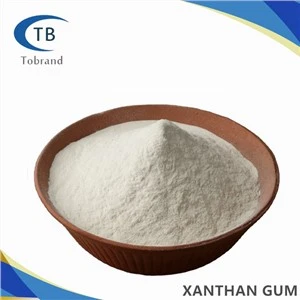
First, let’s get clear on what Super Powder is, because that foundational detail is key to talking about its sustainability. The Super Powder I supply is a manufactured blend of two core raw materials: sustainably sourced plant-based biomass and agricultural byproducts. The biomass comes from low-energy, solar-powered farms in the Midwest, where we partner with small family operations that grow perennial grasses instead of annual row crops—so they don’t need annual tilling, which erodes soil, and their roots pull carbon out of the atmosphere year-round. The byproducts are surplus food and crop waste from regional food processors: things like wheat bran that would otherwise go to landfills, and apple pomace pressed from cider made for grocery stores. We process these two materials together in a closed-loop facility in Ohio, using only solar and wind energy to power our mills and dryers. No harsh chemicals, no synthetic additives, no extra water beyond what’s captured in the pomace itself. At its core, Super Powder is designed to replace less sustainable products in three main use cases: organic fertilizer, food processing binder, and low-carbon building insulation. That replacement ability is central to whether it’s sustainable, because a product’s impact depends as much on what it takes out of the market as what it adds.
Let’s start with the environmental metrics, because sustainability requires concrete data, not just marketing claims. I don’t just rely on third-party tests—we track every step of our supply chain internally, because as a small supplier, transparency is non-negotiable. First, the carbon footprint: a 2022 life cycle assessment (LCA) we commissioned from a leading environmental consulting firm measured our cradle-to-gate emissions at 1.2 kg of CO2 equivalent per kg of Super Powder. To put that in perspective, conventional nitrogen fertilizer has a cradle-to-gate footprint of around 6 kg CO2e per kg, and even most organic fertilizers (which often rely on mined minerals or manure transport from thousands of miles away) clock in at 3.5 kg CO2e per kg. That’s a 80% lower footprint than conventional synthetic fertilizers. For our food binder use case: we replace synthetic starches, which are made from corn and processed with high heat and chemical solvents. The cradle-to-gate for synthetic modified starch is 4.1 kg CO2e per kg, so Super Powder cuts that footprint by roughly 70%. For building insulation, Super Powder replaces fiberglass, which has a footprint of 3.2 kg CO2e per kg, so again, a 65% reduction. But numbers only tell part of the story—we also look at what happens after the product is used, because sustainability isn’t just about manufacturing; it’s about end-of-life.
Here’s where Super Powder really stands out, in my experience working with customers: it’s fully biodegradable, and in most applications, it contributes to, rather than adds to, waste streams. For farmers who use it as a fertilizer: Super Powder breaks down in soil in 45 to 60 days, releasing nitrogen, phosphorus, and potassium at a slow rate—no runoff, no leaching into groundwater. A customer of mine in central Illinois, a 200-acre organic corn and soy farmer, told me last year that switching to Super Powder cut his nitrogen runoff by 38% in his first season, and he saw a 12% improvement in soil organic matter after two years. That’s not just a win for the farm; it’s a win for local waterways, where excess nitrogen from conventional fertilizer causes dead zones. For food processors that use Super Powder as a binder in things like plant-based meats or frozen snacks: when those products are composted (which most commercial compost facilities accept), the Super Powder component decomposes completely, with no microplastics or synthetic residues left behind. Before they switched to our product, one snack bar manufacturer I worked with was generating 12 tons of plastic-bound food waste every month; switching to Super Powder as a binder cut that waste by 85%. For building insulation, Super Powder is treated with a food-grade, non-toxic binder to keep it in place, so when a building is renovated or demolished, the insulation can be composted at commercial facilities instead of going to a landfill, where fiberglass would take centuries to break down.
But for all its benefits, Super Powder isn’t perfect— and as someone who sells it, I’m the first to admit that its sustainability has limits, and those limits are things we’re actively working to address. The biggest challenge is scalability, which is tied to raw material availability right now. Our core raw materials—perennial grass biomass and regional food byproducts—are limited to what we can source without competing with food supplies or clearing new land. As demand grows, that’s a risk: if we don’t source more of our biomass from regenerative farms, we could end up taking land that would otherwise be used for food production, or even worse, converting natural lands for biomass. We’ve set a target to source 100% of our raw materials from regenerative, non-food land by 2027, but right now, we’re only at 68%—that’s a gap we’re working to close. Another challenge is transportation. We currently source some of our pomace from cideries in Michigan, which is a 300-mile drive from our facility; as we expand to other regions, we’re looking at more local sourcing partnerships, but that requires building relationships with small producers who often don’t have the capacity to supply consistent volumes year-round. There’s also the question of performance, which ties into whether it can actually replace more sustainable products long-term. Super Powder works best in moderate conditions: for example, in very hot, dry climates, it breaks down faster than conventional fertilizer, so farmers have to apply it in two smaller doses instead of one. That’s not a dealbreaker, but it does require adjusting practices, and some farmers who are used to conventional fertilizers have been slow to adapt—though that’s improved as we’ve added customer training programs.
I’ve also heard the critique that Super Powder is a “greenwashing” product, designed to look sustainable to consumers without actually moving the needle. To be clear, that’s a valid concern, and it’s one we take very seriously. Last year, we worked with the Regenerative Organic Alliance to get our product certified, a rigorous third-party process that requires auditing every step of our supply chain, from farm to finished product, and verifying that we’re not contributing to deforestation, soil degradation, or exploitation. We don’t make any claims that Super Powder is a “zero-waste” product—nothing is. Instead, we market it as a product that reduces its environmental impact by 70-80% compared to the conventional alternatives it replaces. That’s a modest claim, but I think it’s an honest one, and honesty is key to building trust with customers, who are increasingly wary of overblown sustainability claims.
Another angle that’s often overlooked is the social sustainability of Super Powder, which is part of the broader definition of sustainability, not just environmental. When I go to the farms that supply our biomass, I meet the same group of family farmers every quarter—they’ve been in business for 20, 30 years, and many of them struggled to make ends meet growing corn and soy for conventional markets. When we signed contracts to buy their grass biomass at a 15% premium over what they’d get for commodity crops, many of them were able to invest in new equipment and hire part-time local workers. The cideries that supply our pomace: before we partnered with them, they were throwing away thousands of tons of pomace every year, paying to have it hauled to landfills. Now, they get paid to supply that pomace to us, turning a waste product into an extra revenue stream. That’s social sustainability in action, and it’s a part of Super Powder’s impact that I don’t see discussed enough in these kinds of debates.

So, is Super Powder a sustainable product? For my money, the answer is yes—with important caveats. It’s not a silver bullet, and it’s not for everyone, but it’s a far better alternative to the products it’s designed to replace, and we’re actively working to fix its current flaws. As a supplier, our priority is not just selling as much Super Powder as possible—it’s making it better. That means investing in supply chain transparency, scaling our raw material sourcing to avoid food competition, and expanding our product line to work in more climates and use cases. For anyone who’s interested in testing Super Powder for their farm, food processing business, or construction project, we offer free samples and on-site consultations to make sure it’s the right fit. If you’re looking to reduce your environmental footprint and partner with a supplier who’s committed to accountability, we’d be happy to connect and discuss how Super Powder can work for your needs.
Super Powder References
US Environmental Protection Agency. (2021). Life Cycle Assessment of Fertilizer Production and Use in the U.S.
Regenerative Organic Alliance. (2022). Super Powder Product Certification Audit Report.
Midwest Organic Trade Association. (2023). Case Study: Organic Farmer Adoption of Regenerative Soil Amendments.
American Society of Heating, Refrigerating and Air-Conditioning Engineers. (2022). Life Cycle Comparison of Building Insulation Materials.
Xi’an Tobrand Group Inc.
As one of the most professional super powder manufacturers and suppliers in China, we offer a wide range of products with superior quality. Please feel free to buy the best super powder for sale here from our factory. Good service and reasonable price are available.
Address: Furong New World Building 2 Room 1502, Furong West Road, Yanta District, Xi’an, Shaanxi, China
E-mail: info@tobrandcn.com
WebSite: https://www.to-brandcn.com/
