If you’ve ever worked in an office, data center, or industrial facility, chances are you’ve walked on a technical floor. You know the kind: those raised modular panels that sit on steel pedestals, with cables and utilities tucked beneath. For years, I’ve been supplying these floors—working with installers, facility managers, and IT teams across the globe. And one question comes up more than any other: can a technical floor actually be recycled? It’s not a trivial question either. When a floor reaches the end of its life, most people don’t think about where it goes. They just see a pile of heavy panels, busted pedestals, and tangled wiring heading straight to a landfill. I used to think that too, honestly. But over the past decade, I’ve dug into the science, worked with recycling partners, and seen what actually works (and what doesn’t) when it comes to giving these floors a second life. Let’s break it down, no jargon, just what I’ve learned from years in the game. Technical Floor
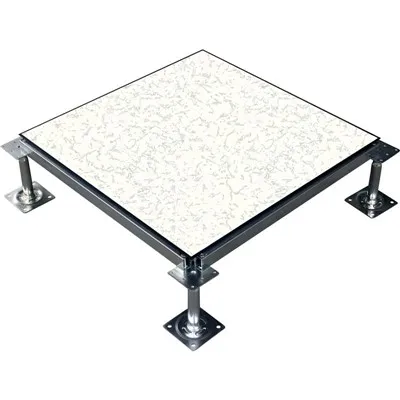
First, let’s get clear on what a technical floor is made of, because that’s the biggest factor in recycling. Most panels have a steel core, a wood-based substrate (like medium-density fiberboard, or MDF), and a top layer of vinyl, laminate, or ceramic. The pedestals are almost always steel, sometimes aluminum, and the wiring beneath is a mix of copper, plastic insulation, and sometimes fiber optics. At first glance, that sounds like a nightmare for recycling—mixing materials is the opposite of what most recycling centers are set up to handle. Back in the early 2000s, when I first started supplying these floors, we’d run into this all the time. If a customer was upgrading their data center, they’d scrap their old floor, and the recyclers would look at the mixed steel, wood, and plastic and say “nope, can’t process that.” So 90% of it would end up in a landfill. That’s not just bad for the planet—it’s a waste of resources, too. Steel is one of the most recyclable materials on the planet; copper is worth its weight in gold (literally); even wood can be turned into energy or particleboard. But if you can’t separate the materials, none of that matters.
So the question isn’t “can technical floors be recycled at all”—it’s “how can we make them recyclable, and actually do it right?” Here’s where the science and real-world experience meet. For starters, not all technical floors are created equal. The ones we supply, for example, use a “modular design” that makes disassembly way easier than older, glued-together floors. That’s not just a convenience for installation—it’s a game-changer for recycling. Let’s walk through a typical take-back process we use with our clients: when a floor is ready to be replaced, our team comes on site, disassembles it panel by panel, sorts each component as we go. Steel pedestals go into one bin, copper wiring into another, vinyl top layers into a separate pile. The panels themselves are sent to a processing facility that can separate the core materials. The steel core gets melted down and reused for new construction or auto parts. The wood substrate, once stripped of vinyl and adhesives, is turned into particleboard for furniture or even biofuel. The copper gets refined and sold back to electronics manufacturers. We’ve had clients tell us that this process even saves them money—some recycling centers will pay you for clean steel and copper, so it can offset part of the disposal cost.
But wait, there are big hurdles that still hold most floors back. A lot of cheap technical floors on the market use toxic coatings or mixed materials that make separation almost impossible. For example, some vinyl top layers have heavy metals that make them unsafe to reuse in building materials, so they have to be incinerated (which is better than landfill, but not ideal). Some wood cores are treated with formaldehyde, which is a hassle to process. And even with the best modular design, if the installation is botched and panels are glued down on site, disassembly becomes a nightmare—you end up breaking panels, contaminating materials, and wasting half the product. That’s why I always tell my clients: if you care about recycling your technical floor, choose a supplier that designs for circularity from the start. The floors we supply are built to be taken apart, no glue, no permanent fasteners—so when the time comes, we don’t have to chisel and pry, we just pop the panels off, sort them, and send each component to the right place.
I’ve also seen a lot of myths floating around about technical floor recycling. One big one is “it’s too heavy to transport to a recycler.” Yeah, steel panels are heavy, but compared to the cost of disposing of them as waste, or the environmental cost of mining new steel, transporting them to a recycling facility makes sense. Especially when you can break them down into smaller, lighter components. For example, a single 2×2 foot steel panel is about 50 pounds, but once you strip the top layer and the wood core, the steel alone is 30 pounds, easy to stack and transport. Another myth: “recycled technical floor materials are low quality.” Let me tell you, the steel we get back from old floors is just as strong as new steel. I’ve seen it used in bridge construction and even new technical floors. The copper from old wiring is refined to the same purity as virgin copper. The only thing that’s different is the carbon footprint—way lower, because we’re not mining new materials.
So what’s the future here? More and more of our clients are asking for closed-loop programs. Closed-loop means we take back old floors, process the materials, and use them to make new floors. Right now, we’re still sourcing some virgin steel, but within the next three years, we’re planning to switch to 100% recycled steel for all our panels. That’s not just a pipe dream—we’ve tested prototypes with recycled steel, and they perform exactly like the original. The biggest push right now is for standardization: if all technical floor suppliers used modular, adhesive-free designs, and standardized component sizes, recycling would be way easier and cheaper. Right now, every supplier has their own pedestal size, their own panel thickness, so recyclers have to reconfigure their process for each job. Standardizing would cut that cost in half, and make recycling accessible for every facility, not just the big data centers that can afford specialized programs.
But let’s be real—recycling isn’t perfect. Some components will never be fully recyclable, and that’s okay. The goal isn’t to get 100% of the floor recycled every time, it’s to get as much as possible out of landfills. Even incinerating non-recyclable components with energy recovery is a better option than sending them to a landfill, because you’re generating electricity instead of wasting space. And for the parts that can be reused whole? We’ve got a network of small businesses that buy gently used panels for their server rooms or office spaces. A lot of times, a floor is replaced not because it’s broken, but because a company upgraded to a higher weight capacity, or changed their layout. Those panels are perfectly good for smaller spaces, so instead of recycling them, we sell them at a discount, extending their life even more. That’s the circular economy in action, not just recycling.
As someone who’s been in this business for 15 years, I’ll admit I used to feel like technical floors were a throwaway product. You sell ’em, install ’em, forget ’em. But over time, I’ve come to see them as a big part of the sustainability puzzle. Think about all the data centers popping up around the world—each one has thousands of square feet of technical floor. If even 50% of those floors are recycled instead of landfilled, that’s millions of pounds of steel, copper, and wood kept out of the ground. That adds up. The key is that it’s not just up to suppliers, either. Facility managers, installers, even IT teams need to care about what happens when the floor is at the end of its life. Asking your supplier about recycling programs when you buy a new technical floor isn’t just a nice thing to do—it’s a smart business move, too. You avoid costly disposal fees, you reduce your company’s carbon footprint, and you support a supply chain that’s focused on circularity.
At the end of the day, the answer to “can a technical floor be recycled?” is a resounding yes—but only if we design them to be recycled. It’s not a magic fix, and there are still kinks to work out, but it’s totally doable. I’ve seen it happen hundreds of times, with the floors we supply, and with other forward-thinking suppliers. If you’re managing a facility that has an old technical floor that needs to be replaced, or you’re building a new space and want to make sustainability a priority, we can help. We’ve got experience with disassembly, sorting, and closed-loop recycling, and we’d be happy to walk you through what works for your space. Don’t just send your old floor to a landfill—give those materials a second life. It’s better for your budget, better for the planet, and it’s the right way to do business.
If you’d like to learn more about our take-back and recycling programs, or discuss your technical floor project, feel free to reach out. We’re here to help.
Raised Floor References
- Global Sustainability Standards Board. (2022). Circular Economy Guidelines for Construction Materials.
- International Data Center Authority. (2023). End-of-Life Management for Technical Floors.
- Steel Recycling Institute. (2021). Recycled Steel Performance in Modular Construction.
- Wood Recyclers Association. (2022). Secondary Use of Processed Wood for Building Products.
Fineco Tech Co., Ltd.
As one of the most professional technical floor manufacturers and suppliers in China, we’re featured by quality products and good service. Welcome to wholesale customized technical floor made in China here from our factory. If you have any enquiry about cooperation, please feel free to email us.
Address: Wuyue Square, Wujin District, Changzhou, Jiangsu, China
E-mail: info@finecotech.com
WebSite: https://www.finecoglobal.com/
