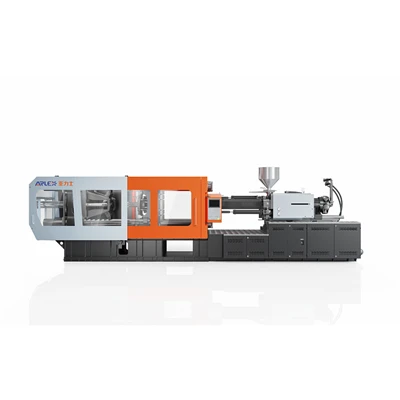
Hey everyone, it’s Jake here—lead product specialist at our multi-resin injection molding machine division, and I’ve spent the last 12 years helping manufacturing teams stop fighting inconsistent parts, wasted resin, and bottlenecks tied to multi-material tooling. Today, I want to talk about a technology that’s been a game-changer for clients struggling with complex, high-performance parts, and it’s one that every multi-resin molder should have in their toolkit: the hot runner system for multi-resin injection molds. If you’ve ever worked on a project where a single part needs two different plastics—say, a soft TPE grip on a hard ABS power tool housing, or a food-grade PP seal paired with a heat-resistant nylon 6 gear—you know the headaches: cold runners wasting material, gate vestiges marring part appearance, and inconsistent resin flow derailing cycle times. Let’s break this down like I would in a plant floor huddle, no jargon overload, just real-world what, why, and how. Multi-Resin Injection Molding Machine

First, let’s ground this in what makes multi-resin injection molding different from standard single-resin work. When you mold two or more materials into one part, you’re essentially doing two (or more) injection shots into the same mold, either sequentially (over-molding) or simultaneously (co-injection). The catch? You can’t just use a standard cold runner system here. A cold runner relies on a sprue and channels that cool with each cycle—you have to eject and reclaim the solidified runner material every time, which adds waste, cycles, and labor. For multi-resin, this is even worse because each resin has its own melting point, viscosity, and cooling rate; a cold runner would force those different materials to mix in uncontrolled ways, leading to delamination, weak bonds, or rejects. That’s where the hot runner system comes in.
At its core, a multi-resin hot runner system is a temperature-controlled network of channels, nozzles, and manifold blocks that keeps every resin in a molten state from the injection unit to the mold cavity, eliminating cold runners entirely. But here’s the critical part: it’s not a one-size-fits-all single-resin hot runner repurposed for two materials. A good multi-resin hot runner has to handle at least two distinct molten resin streams, keep them separate until they reach the exact point of injection into the mold, and precisely control each stream’s pressure, temperature, and flow rate to prevent cross-contamination or improper bonding. Let’s get into the key components you’d see in a working multi-resin hot runner, because this isn’t just theory—this is what our engineering teams tweak for our customers every single week.
First, the manifold block. This is the backbone. For multi-resin applications, you’ll usually see dual manifolds: one for the base resin and one for the over-mold resin, each line heated to a specific temperature matched to that resin’s specs. For example, if you’re over-molding a soft TPE (melt temp ~180°C) onto a hard PC (melt temp ~280°C), the TPE manifold runs at 185°C to keep it molten without degrading, while the PC manifold runs at 285°C, with insulation layers between the two manifolds to stop heat transfer. That insulation is non-negotiable—if the TPE manifold heated up to PC temp, it would start to break down, leading to streaks or weak bonds. Next, the hot runner nozzles. These are the parts that deliver resin directly into the mold cavity, and for multi-resin, they’re highly specialized. We work with a nozzle design that has either separate valve pins (for sequential over-molding) or coaxial tips (for co-injection) to keep materials from mixing. Valve gate nozzles are especially popular for multi-resin because they let you control when each resin is injected—no leakage between shots, and you can adjust gate timing to get a clean, flush edge between materials, which is huge for parts that need to look and perform without blemishes.
Now, why does this matter for real manufacturing? Let’s use a recent client example— a small outdoor power equipment maker we partnered with last quarter. They were over-molding TPE grips onto ABS handles using a standard cold runner system before, and they were seeing a 22% resin waste rate (from cold runner sprues and gates), 15% of parts were being rejected due to gate vestiges that made the grips feel rough, and their cycle time was 52 seconds per part. After switching to a custom multi-resin hot runner system paired with one of our multi-resin injection molding machines, their waste dropped to 3%, rejects went down to 2%, and cycle time shrank to 38 seconds. That’s not just a small improvement—for a company producing 500,000 handles a year, that’s $120,000 in annual material savings alone, plus faster time to market for new parts. I hear that same story over and over: molders think multi-resin will mean more waste and slower cycles, but the right hot runner system flips that.
But wait—this isn’t a setup that works for every multi-resin job. There are factors you have to get right to avoid common pitfalls. Let’s talk about the mistakes we see customers make when they first test multi-resin hot runners. First, mismatched temperature control. If you set the manifold temp 10°C too high for a heat-sensitive resin, you get thermal degradation, which causes discoloration and brittle parts. If it’s too low, the resin solidifies mid-channel, leading to short shots. That’s why our engineers work directly with mold shop teams to run material flow analysis before installing a hot runner—we map exactly what temp each resin needs, how much pressure it needs to flow, and where the nozzles should be placed to hit the mold cavity evenly. Second, poor valve pin synchronization. For sequential over-molding, the valve pins that open and close each nozzle have to be timed perfectly. If the pin for the base resin closes too early, you’ll have a gap between the base and over-mold material. If it closes too late, you’ll get over-spray or material mixing at the edge. Our systems integrate with the injection machine’s control panel to sync pin timing with the injection stroke, so even molders with 10 years of experience can get consistent results on their first run. Third, ignoring material compatibility for the hot runner components. Some resins, like glass-filled nylon or PVC, are abrasive and can wear down standard steel nozzles. We offer hard-coat or stellite-tipped nozzles for these applications, which extend nozzle life by 3x compared to standard parts.
Another big question I get: is this only for sequential over-molding, or does it work for co-injection too? The answer is both. For co-injection, where you have a core of one resin and a skin of another (think a thin, scratch-resistant TPU skin over a PP core to cut cost without losing performance), the multi-resin hot runner uses coaxial nozzles that mix the two resins at a precise ratio right before injection. The hot runner keeps both resins separate until they reach the nozzle tip, so you get a uniform core-skin structure every time, no mixing in the manifold. This is way more consistent than trying to do co-injection with a cold runner, which would let the resins blend unevenly.
I also want to address the elephant in the room: cost. Multi-resin hot runner systems are an upfront investment, no question—they’re more complex than single-resin hot runners, and custom designs for specific parts add to the cost. But when you look at total cost of ownership, it’s a no-brainer. Let’s go back to that power equipment client: their upfront cost for the hot runner system was $18,000, but their annual savings from material waste and faster cycles? $120,000. That’s a payback period of just under two months. For smaller runs, even if you’re making 50,000 parts a year, you still cut labor costs from trimming cold runners, and you avoid the cost of reworking defective parts. We’ve also seen clients use multi-resin hot runners to take on jobs they couldn’t before—like medical parts with a biocompatible resin over a structural base—because the hot runner lets them maintain the strict cleanroom requirements that cold runner systems can’t meet (since cold runners require opening the mold to remove solidified material, which introduces contaminants).
Now, let’s tie this back to what we do here. We’re not just a multi-resin injection molding machine supplier—we work directly with mold manufacturers and production teams to design, test, and integrate custom multi-resin hot runner systems that are tailored to your specific parts and resins. A lot of suppliers will sell you a hot runner and a machine and wash their hands of it, but our support team is on-site at your plant for the first three production runs, making sure the hot runner is calibrated correctly, the valve pins are synced, and you’re hitting your cycle time and quality targets. We also offer retrofits for existing multi-resin molding lines, so you don’t have to replace your entire machine to upgrade to a more efficient hot runner.
If you’re reading this and you’re struggling with multi-resin parts—waste, rejects, cycle times that are holding you back—let’s talk. We’ve helped teams in automotive, medical, consumer goods, and outdoor equipment streamline their multi-material molding processes, and we can do the same for you. Whether you’re making your first multi-resin part and need guidance on choosing the right resin and hot runner setup, or you’re looking to upgrade an existing line, our team has the hands-on experience to get you results. Don’t let outdated cold runner technology limit your product design or eat into your profits—reach out to our team to discuss your multi-resin hot runner needs today.
References
Optical Frame Injection Moulding Machine Rosato, D. V., & Rosato, M. G. (2019). Injection Molding Handbook (5th ed.). Hanser Publishers.
Kazmer, D. O. (2016). Injection Mold Design Engineering (2nd ed.). Hanser Publishers.
Society of Plastics Engineers (SPE). (2021). Multi-Resin Injection Molding: Processes, Materials, and Tooling. SPE Press.
Ningbo Yalishi (Arlex) Plastic Machinery Co., Ltd.
Address: No.63, Huangsu East Road, Industrial Zone, Dongqian Lake Tourist Resort, Ningbo, Zhejiang Province
E-mail: leo@arlex.cn
WebSite: https://www.arleximm.com/
