If you’ve ever shopped around for water treatment gear, chances are you’ve seen two terms thrown around nonstop: ion exchange equipment and reverse osmosis (RO). At first glance, both sound like they “clean water,” and even some salespeople might use them interchangeably, but that’s a huge mistake—especially if you’re sourcing gear for your plant, a small brewery, or even a residential well that’s giving you hard water headaches. Let’s break this down straight, no stuffy jargon, and why knowing the difference matters when you’re looking for a reliable ion exchange equipment supplier. Ion Exchange Equipment

First off, let’s start with what each tech actually does, because that’s where most people go wrong. Ion exchange (IX) is a process that swaps out unwanted ions for harmless ones. Think of it like a tiny, selective gatekeeper: if your water has too many calcium or magnesium ions (the stuff that makes soap scum, kink your showerhead, and short out water heaters), the IX resin beads in your system attract those positively charged ions and hold onto them, releasing equal amounts of sodium ions in their place. Easy enough, right? It’s basically a reversible reaction—once the beads get full of the yucky ions, you “regenerate” them with a brine solution, flushing the used ions out and recharging the resin for next time. It’s been around for decades, mostly for softening water, but it’s also used to remove heavy metals, nitrates, and even radioactive ions in specialized setups.
Reverse osmosis, on the other hand, is all about size exclusion. RO uses a semipermeable membrane with microscopic pores—like a tiny sieve that only lets water molecules pass through, and blocks almost everything else. That includes dissolved salts, minerals, bacteria, microplastics, and even some larger organic molecules. It’s not swapping anything; it’s physically straining out contaminants by pushing water at high pressure through the membrane. So RO water is super pure—think lab-grade or bottled water quality—but it also removes all the good minerals too, which is why you’ll see people adding mineral drops back in for drinking water.
Now, let’s get to the practical stuff, because that’s what matters when you’re picking gear. Let’s talk about what each is best for, because that’s where most users end up making a misstep. If your main problem is hard water—like, your dishes have spots, your laundry feels scratchy, or your commercial equipment is building up scale—IX is almost always the go-to. IX softeners are cheaper to install for medium-scale uses (like a 5,000-square-foot office building or a small food production line) and they’re super efficient at targeting those specific divalent ions that cause scale. Want an example? A lot of coffee roasters use IX softeners because even a little scale in their boilers can ruin batch consistency, and IX is perfect for that. RO, though, would work too, but it’s way more energy-heavy for just softening—you’d be wasting electricity pushing water at high pressure through a membrane when IX does the same job with way less power.
But if your problem is total dissolved solids (TDS), or removing contaminants like lead, arsenic, or pharmaceuticals, RO is the way to go. IX can remove some heavy metals, but not nearly as effectively as RO. For example, if you’re a residential user with well water that has high arsenic, an IX setup won’t get you to the safe TDS levels the EPA recommends, but a whole-house RO system will. The flip side? If you need to keep minerals in the water—like for a municipal water system that’s required to add fluoride, or a brewery that needs specific mineral levels for beer flavor—IX is way better. RO strips all minerals, so you’d have to manually add them back, which adds extra cost and complexity. That’s a big reason craft breweries often mix both: an IX softener to knock out hardness first, then RO to adjust TDS for specific beer styles.
Next, let’s get into the nitty-gritty of maintenance and costs, because that’s where buyers get sticker shock if they don’t do their homework. IX systems, from a supplier’s perspective, are pretty low-hassle. The only regular maintenance you’ll need is adding brine (usually salt or potassium chloride) for regeneration, and replacing the resin beads every 3-10 years, depending on use. The upfront cost is lower than a comparable RO system for most applications, and the operating cost is way less—IX uses almost no electricity, just a little water for the brine flush (usually 5-10% of total water used, vs. RO which can waste 20-50% of input water as “reject” water that has to be drained).
RO systems, though, have way more moving parts and higher long-term costs. The membrane itself needs replacement every 2-5 years, and that’s not cheap—especially for commercial setups. They also need constant pressure checks, pre-filters to keep sediment from clogging the membrane, and more complex controls. The reject water thing is a big one: if you’re in a drought-prone area, wasting half your water on reject isn’t just expensive, it’s a sustainability issue. A lot of people don’t realize that residential RO systems waste 3 gallons of water for every 1 gallon of purified water, which adds up fast on a monthly bill.
Wait, but what about smaller-scale uses, like a home point-of-use system? A lot of people ask if they should use IX or RO under their kitchen sink. For drinking water, RO is often preferred because it removes more contaminants, but if you just want to stop limescale on your faucet, IX is simpler and cheaper. I’ve had customers come to me saying they installed an RO under their sink and their water tastes flat, and 9 times out of 10, they didn’t realize RO strips all minerals. Switching to an IX softener for the whole house fixes the scale without making their drinking water taste weird.
Another key difference: selectivity. IX is super selective—you can tailor the resin beads to target specific ions. For example, if you’re a mining company trying to remove copper from wastewater, we can use a specialized IX resin that only grabs copper, leaving other minerals untouched. RO, though, is non-selective—it blocks everything, so you can’t pick and choose. If you have a mix of salts and trace metals in your water, RO will remove all of them, which might be overkill if you only need to target one ion. That’s why industrial users often combine both: IX to pre-treat water and target specific contaminants, then RO for final polishing to get to ultra-pure levels.
Let’s clear up a common myth, too: a lot of people think IX is “old tech” and RO is “newer and better.” That’s not true. IX is still the most widely used water treatment method for softening, and it’s far more efficient than RO for applications where you don’t need ultra-high purity. The mistake a lot of new buyers make is thinking bigger = better, so they default to RO even when IX would work better and save them money. For example, a small car wash I consulted with last year was using an RO system, but their main problem was hard water leaving spots on cars. Swapping to an IX softener cut their water costs by 30% and reduced maintenance on their equipment, since RO membranes were clogging fast from the high hardness water.
Now, when should you pick which one? Let’s make a quick cheat sheet:
- Pick ion exchange equipment if: Your main issue is hard water (scale, soap scum), you need to target specific ions (heavy metals, nitrates), you want to keep beneficial minerals in the water, or you’re looking for lower long-term operating costs.
- Pick reverse osmosis if: You need ultra-pure water for drinking, lab use, or pharmaceuticals, you have high TDS levels that IX can’t remove, or you’re dealing with contaminants that IX resins don’t target.
That said, a lot of setups work best with both. For example, a hospital might use IX to soften water for their boilers, then RO to purify water for dialysis machines. A food and beverage plant might use IX to adjust mineral levels for processing water, then RO to remove any leftover contaminants. As an ion exchange equipment supplier, we regularly work with customers who already have RO systems and need to add IX to make their setup more efficient, or vice versa.
The big takeaway here is that there’s no one-size-fits-all answer. The worst mistake you can make is buying the wrong system for your needs. I’ve seen so many customers waste thousands of dollars on an RO system when they only needed a basic IX softener, or struggle with insufficient purification because they skipped IX pre-treatment for their RO setup.
If you’re not sure which tech is right for your water needs—whether you’re a homeowner, a small business, or an industrial operation—reach out to talk through your specific situation. We don’t push one tech over another, but as an ion exchange equipment supplier, we can walk you through the pros and cons, cost breakdowns, and which setup will work best for your goals.
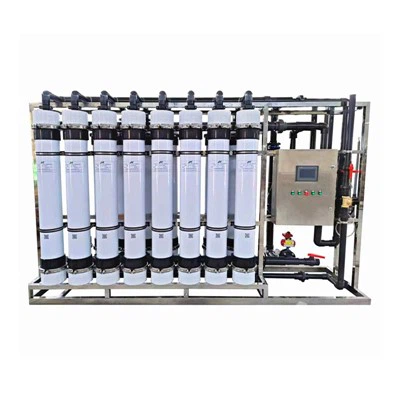
We’re here to answer your questions, share case studies from similar operations, and help you find a solution that fits your budget and needs. Don’t hesitate to connect with us for a no-obligation chat about your water treatment requirements.
Pretreatment & Filtration Equipment References
- American Water Works Association. (2020). Water Treatment Unit Processes: Principles and Practice. McGraw-Hill.
- U.S. Environmental Protection Agency. (2021). Ion Exchange and Reverse Osmosis for Drinking Water Treatment. EPA Office of Ground Water and Drinking Water.
- International Water Association. (2019). Industrial Water Treatment: Ion Exchange and Membrane Processes. IWA Publishing.
Shandong Yanuo Environmental Protection Equipment Co., Ltd.
We’re well-known as one of the leading ion exchange equipment manufacturers and suppliers in China, featured by quality products and good price. Please rest assured to buy bulk ion exchange equipment made in China here from our factory. Customized orders are welcome.
Address: North Side of the Road, 1,000 Meters West of the Intersection of Fenghuangshan West Road and Provincial Highway S102, Wangfu Subdistrict, Qingzhou City, Weifang City, Shandong Province.
E-mail: ynhb.499973983@gmail.com
WebSite: https://www.zkyaruo.com/
