Hey folks, let’s cut to the chase—if you work with orbital motors (and I’m guessing you do, since you’re here), you’ve probably dealt with weird gunk in hydraulic fluid that made your equipment sputter or lock up. I’m a orbital motor supplier, been in this game for 12+ years, and one question that comes up at least once a week is: Are these things actually sensitive to fluid contamination? Short answer? Yeah, they’re way more sensitive than a lot of people think—if you skip this, you’re looking at repair bills, downtime, and a whole lot of headaches. Let me break this down like I do for my regular clients, no stuffy engineering jargon, just real talk. Orbital Motor

First, let’s remember what orbital motors do. They’re those workhorses in your forklifts, construction equipment, agricultural combines, even that conveyor system at the packaging plant. Their whole design relies on super tight clearances—like, think a human hair or thinner—between the gerotor gears (the round, overlapping gears that make the motor spin) and the housing. That’s how they convert hydraulic pressure into the torque that moves your machine. If there’s gunk in the fluid, those tiny gaps are the first place it gets stuck.
Now, what kind of contamination are we even talking about? It’s not just random dirt from a job site. There’s three big types I see every day: solid particles (metal shavings from a bad pump, dust, seal fragments), water (condensation in the hydraulic tank, rain getting in when you top off fluid), and chemical contamination (old fluid mixed with new, or fluid that’s gone bad from heat). Each messes with orbital motors in different ways, and I’ve seen all three tank a motor faster than you can say “service call.”
Let’s start with solid particles, the most common culprit. I had a client last quarter—guy runs a fleet of skid steers—who ignored a warning about his fluid’s cleanliness level. Turns out, his hydraulic pump had started wearing down and shedding tiny metal bits, and those bits got into the orbital motors on the drive wheels. Those clearances I mentioned? The metal shavings got jammed in between the gerotor gears and housing. The motor would stutter when he loaded up the bucket, then one day it just seized mid-job on a jobsite in the middle of a rainstorm. He ended up replacing two orbital motors, plus paying for a full fluid flush—cost him $8,200. If he’d just checked his fluid’s ISO cleanliness rating (that’s the standard for how much solid gunk is in there) every month, he could’ve caught the pump issue way earlier.
Wait, what’s a good ISO rating for orbital motors? I tell my clients to aim for ISO 4406 code 18/15 or cleaner. That means no more than 25,000 particles per 1mL of fluid (for particles 4 microns or bigger) and no more than 1,600 particles per 1mL for 10-micron particles. Most off-the-shelf hydraulic fluid is around 20/17, which is too dirty for orbital motors—you need a filtration system that can get those tiny bits out. A lot of guys skip upgrading their filters because they don’t want to spend an extra $50 a month, but compare that to $8k for a new motor. No brainer.
Next up, water contamination. This one’s sneaky because it doesn’t always look obvious—if you check your fluid with a standard test strip, you might miss it until it’s too late. Water gets in two ways: either condensation from temperature changes (hydraulic tanks breathe, so warm air gets in, cools, and turns to water) or you spilled it when topping off fluid. How does this mess with orbital motors? First, water causes rust inside the motor. Those tiny metal surfaces on the gerotor gears? Rust puffs up, which changes the clearance. A motor that was spinning smooth starts to wobble, and eventually the rust flakes off, which becomes solid particles on top of that. Worse, water breaks down hydraulic fluid’s additives—the stuff that keeps the oil slippery. No additives mean more friction, so the motor has to work harder, which burns it out faster. I had an agricultural client last year who stored his combine over winter without draining the hydraulic tank, and half the water condensed in there. His orbital motor for the auger seized so bad he had to cut it off with a crowbar. That’s a $3,500 motor, all because of a cup of water that got into the tank.
Third, chemical contamination. This is when you mix incompatible fluids, or use old fluid that’s degraded. Over time, hydraulic fluid breaks down from heat and pressure, forms sludge, and loses its lubrication. If you dump a new synthetic fluid on top of old mineral-based fluid, they can react and create a gummy residue that clogs up the motor’s ports. That restricts flow, so the motor doesn’t get enough pressure to spin. I once got a call from a packaging plant where their conveyor orbital motors were running slow for no reason. Turned out, the maintenance team had used a generic hydraulic fluid instead of the synthetic we recommended, and the old fluid had mixed with the new one to make sludge. They had to take all four motors apart, clean them out, and replace the seals—cost way more than if they’d just stuck with the right fluid from the start.
Wait, but let’s get one thing straight—orbital motors are tougher than some other hydraulic components, right? Yeah, if you’re working in super dirty environments, they can handle a little more gunk. But that doesn’t mean you can ignore it. A lot of guys think “my motor ran for 5 years on dirty fluid, why change now?” But that’s the thing—when it fails, it’s never gradual. It fails catastrophically. You won’t get a warning light, usually—one day the motor just stops, and you’re stuck. I’ve had clients tell me “it ran fine for 6 years on that fluid,” and when I pull the motor apart, there’s a 1mm thick layer of sludge inside that’s completely gummed up the gerotor. That’s not normal wear, that’s contamination.
So what can you do to protect your orbital motors? Let’s make this actionable, not just a lecture. First, track your fluid’s cleanliness. Get a portable fluid test kit—they’re $100, and you can test your fluid every 500 hours. If it’s over ISO 18/15, change the filter. Second, install a water separator on your hydraulic tank. It’s a tiny add-on that catches condensation before it gets to the motor—costs like $70, way cheaper than a new motor. Third, never mix fluids. If you need to top off, use exactly the same type as what’s in the system. And fourth, if your motor is showing signs of trouble—stuttering, slow spin, weird noises—don’t wait. Pull it apart, check for gunk, instead of just replacing it. I can’t tell you how many times I’ve seen a $500 motor get replaced when all it needed was a good flush and a $15 filter change.
Wait, let’s address a common myth I hear all the time: “I use a big filter, so contamination isn’t a problem.” No, size matters, but micron rating matters more. A 10-micron filter might catch big dirt, but not the tiny 5-micron metal shavings that jam into orbital motor clearances. You need a filter with a 5-micron absolute rating—meaning it catches 99% of particles 5 microns or bigger. That’s non-negotiable for orbital motors. I see guys use 25-micron filters all the time, and they wonder why their motors are dying. That’s a quick fix that saves you from so much trouble.
Another thing: when you install a new orbital motor, make sure you flush the entire hydraulic system first. Even if you’re replacing a motor because it failed, the old gunk from the old motor is still in the lines and pump. If you just swap out the motor and don’t flush, the new one will get contaminated in a week. That’s another mistake I see all the time. I had a client who replaced one motor, didn’t flush, and the new one failed 10 days later. He was out two motors instead of one. Total rookie move, but easy to avoid.
At the end of the day, orbital motors are sensitive to fluid contamination—no ifs, ands, or buts. It’s not just about keeping them running longer; it’s about avoiding downtime. A construction site can’t afford to have a skid steer down for two days waiting for a new motor. A farmer can’t have his combine stuck during harvest. A packaging plant can’t have their conveyor down during a shipping deadline. That’s why paying attention to fluid quality isn’t just maintenance—it’s keeping your business moving.
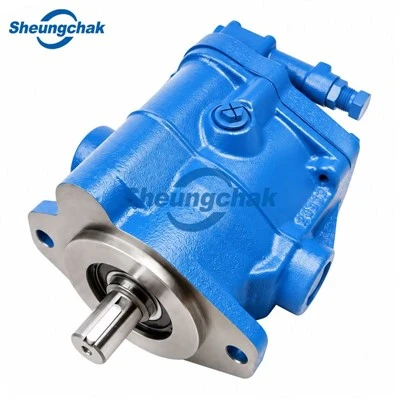
If you’re dealing with orbital motor issues, or you just want to make sure your current setup is protecting your motors, hit me up to connect for a procurement chat. I can walk you through filtration upgrades, fluid testing, or even point you to the right orbital motors for your application that are built to handle tough conditions, with built-in protection against common contamination issues. No sales pitch, just real advice from someone who’s been in this long enough to know what works.
Orbital Motor References
- Hydraulic Fluid Contamination: Effects on Equipment Lifespan, National Fluid Power Association, 2022
- ISO 4406: Hydraulic Fluid Power—Cleanliness Levels, International Organization for Standardization, 2017
- Gerotor Motor Design and Contamination Tolerance, Mobile Hydraulic Technology Journal, 2021
- Water Contamination in Hydraulic Systems: Detection and Mitigation, Fluid Power Research Institute, 2023
Guangdong Sheungchak Hydraulic Technology Co., Ltd.
Guangdong Sheungchak Hydraulic Technology Co., Ltd. is one of the most professional orbital motor manufacturers and suppliers in China. We are committed to providing high quality customized products with competitive price. Please rest assured to wholesale durable orbital motor for sale here and get pricelist from our factory.
Address: Building 25, Liantang Industrial City, Shangcun Community, Gongming Subdistrict, Guangming District, Shenzhen, China
E-mail: info@hydraulicsc.com
WebSite: https://www.hydraulicsc.com/
