Hey everyone, if you’ve ever stopped to wonder how much a school desk actually costs, you’re not alone. As someone who’s been in the school desk supply game for over 10 years now, I’ve heard this question more times than I can count—from frantic school admins panicking over back-to-school budgets to teachers who just want to know if the new desks they’re eyeing will actually hold up for 10 years of 12 different kids a semester. Let me break this down real, no-BS style, because this isn’t some textbook math problem. It’s way more complicated than it looks at first glance. School Desk
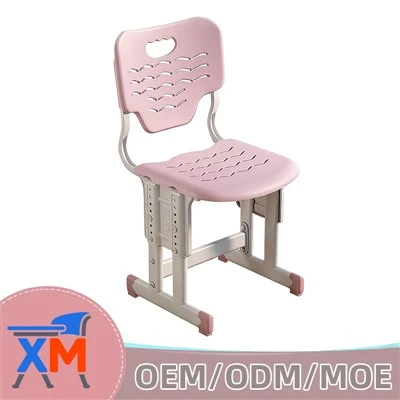
First off, let’s get one thing straight: there’s no single price tag for a school desk. I’ve sold desks that cost $25 apiece and ones that clock in at over $200. The gap is huge, right? So what determines that number? Let’s start with the most obvious stuff: materials. Ten years ago, most basic school desks were made of particleboard tops and thin steel frames. That stuff is cheap, no doubt about it—we could knock those out for like $18 to $22 each back when I started. But here’s the thing: particleboard absorbs moisture, it chips after a year or two, and the glue in it can start to off-gas weird fumes when it gets hot in a classroom. We stopped carrying those about 7 years ago because too many schools came back complaining that half their desks were trash within 3 years, and they were right to be mad. Why waste money on something you have to replace in a few years?
Now, if you want a desk that’s actually built to last, the materials change. The standard now for most K-12 schools is solid hardwood plywood tops (usually birch or maple—something that’s tough enough to handle crayons, scissors, and the occasional backpack being dragged across it) and 16-gauge steel frames. That stuff costs more upfront, but it doesn’t chip, it doesn’t warp in humid or dry classrooms, and it can take way more abuse. A basic desk like that runs between $70 and $100 each, depending on how many you order. Wait, order size matters too—no surprise there. If a school is buying 100 desks, I can give them a way better per-unit price than if they’re just replacing 10 desks in a single classroom. Quantity discounts aren’t a scam—they’re just how manufacturing and shipping works. More units mean we can buy materials in bigger bulk, ship them in full truckloads instead of partial LTL shipments, and pass those savings along.
Next up is features, because modern school desks aren’t just flat boards with legs anymore. Let’s say you have a high school that needs desks with built-in book boxes for textbooks, or a college that wants desks with cable management to hide laptops and chargers. Those add-ons don’t come cheap. A basic desk with a built-in book box adds about $20 to $30 per unit. If you want height adjustability for special ed students or for growing kids (super important, by the way—kids come in all sizes, and forcing a 10-year-old to sit at a desk made for a 14-year-old is bad for their posture), that’s another $30 to $50. I once worked with a middle school district that ordered adjustable desks with lockable drawers for students who stored their gear at school, and those ended up being $150 each. Worth every penny? In my opinion, yes, but that’s a big jump from the basic $70 desk.
Then there’s the stuff you don’t always see: compliance and safety. Schools can’t just buy any old desk off Amazon. There are federal guidelines in the US (and most countries have their own) for things like lead levels in paint, edge rounding to prevent cuts, stability so a desk doesn’t tip over if a kid leans too hard on it, and flame resistance. We have to make sure every desk we sell passes those tests, and that costs money. We have to get third-party lab testing, follow strict manufacturing standards, and use materials that meet those safety rules. A lot of cheap no-name desks from overseas skip that part, but if one of those breaks and hurts a kid, the school is the one that gets sued, not the supplier. So that $25 desk? It might seem like a steal, but if it doesn’t meet safety codes, it’s a waste of money—and a risk no school should take. I had a school rep come to me a few years ago saying they found desks for $19 each online, and I had to explain to her that those desks weren’t rated for continuous use in a school, they didn’t have the right edge rounding, and their paint had lead levels 3 times the legal limit. She ended up ordering 200 of our mid-range desks instead, and emailed me a year later saying not a single one had a problem.
Wait, let’s also talk about where the desks are made and shipping. If you order a desk made in the US, you’re paying for domestic labor and materials, which is more expensive than importing from Asia. But you get faster shipping, lower risk of delays, and you’re supporting local workers, which is a big plus for a lot of schools. If you’re okay with waiting 6 to 8 weeks for shipping, you can get imported desks for a little less—usually between $50 and $80 for a basic one. But lately, shipping costs have been all over the place, and supply chain delays have gotten worse, so that $50 desk might end up being $60 once shipping is added, same as a domestic one. It’s not always the bargain it looks like on paper.
Oh, and don’t forget about extras like assembly and warranties. A lot of schools don’t have the time or staff to put together 500 desks before the school year starts. We offer assembly services for an extra $10 to $15 per desk, and it’s worth every cent. Our team can put together 100 desks in a day, which would take a school’s maintenance crew 3 days. And what about the warranty? A basic particleboard desk has a 1-year warranty, if that. Our mid-range desks have a 10-year warranty, and our top-of-the-line adjustable ones have a 15-year warranty. That means if a frame bends or a top cracks within those years, we replace it for free. A $25 desk with a 1-year warranty is cheaper upfront, but if you have to replace half of them every 2 years, you’re actually spending way more in the long run. I had a small elementary school switch from cheap desks to ours a couple years ago, and their admin told me last year that their repair and replacement budget for desks went down by 70%. That’s the kind of number that makes any school’s principal happy.
Let’s put this all together with a real example. A 500-student elementary school needs 500 desks for the upcoming year. They’re a public school, so they have to stay within a strict budget, but they also want something that will last for their students. They go with our basic solid hardwood top, steel frame desks, no fancy add-ons, 500 units total. Their cost? Around $85 per desk, before tax and shipping. That’s $42,500 total. But if they went with those $25 particleboard desks, they’d pay $12,500 upfront, but they’d have to replace them every 3 years. Over 15 years, that’s 5 replacements, totaling $62,500. Plus, they’d have to deal with the hassle of disposing of old desks, not to mention the potential safety issues. So even though our desks cost 3 times more upfront, over 15 years they save the school $20,000, and they don’t have to deal with constant replacements. That’s the math no one talks about when they see the cheap price tag.
Another example: a 900-student high school wants adjustable desks for every classroom, because they have students of all ages, plus a few special ed students. They also want built-in book boxes so students don’t have to carry backpacks everywhere. 900 units, so a good quantity discount. They go with our adjustable desk with book boxes, height adjustment, and lockable drawers. Their cost? Around $140 per desk, total for the order is $126,000. That’s more than the elementary school’s desks, but these desks will last 15 years, handle heavy use, and accommodate every student. The high school’s admin did the math and realized that over the lifetime of these desks, they’d be replacing 2 sets of cheaper desks, so the total cost would be almost the same, but their students have way better, more functional desks that help with their posture and organization.
I get it, budgets are tight for schools. Every district is stretched thin, and every dollar counts. But the mistake a lot of people make is looking only at the upfront cost, not the long-term value. A school desk isn’t a one-time purchase that you throw away when it breaks. It’s something that gets used 6 hours a day, 180 days a year, by kids who are still growing and learning. If you buy a desk that’s cheap and falls apart, you’re not just wasting money—you’re putting staff in the position of having to fix desks instead of doing other important jobs, and you’re giving students desks that might be uncomfortable or unsafe.
So if you’re a school admin, a teacher, or someone who works in school facilities, what should you be looking for? First, figure out your needs: how many desks do you need? Do you need adjustability? Book boxes? Lockable storage? Then, compare total cost over time, not just the per-unit price. Check that the desks meet all safety and compliance standards in your area. And work with a supplier who’s been in the game long enough to stand behind their products—someone who’ll answer your calls when you have a question, not just disappear after you pay.
I’ve been doing this for long enough that I can tell you a good desk when I see one. I’ve seen cheap desks that lasted a semester, and I’ve seen our desks that are still going strong 12 years later, in a school district that only replaces desks when they need to adjust for grade level changes, not because they’re broken. At the end of the day, the cost of a school desk isn’t just about the materials or the features. It’s about what you’re getting for your money: safety, durability, support for students, and peace of mind for the staff.
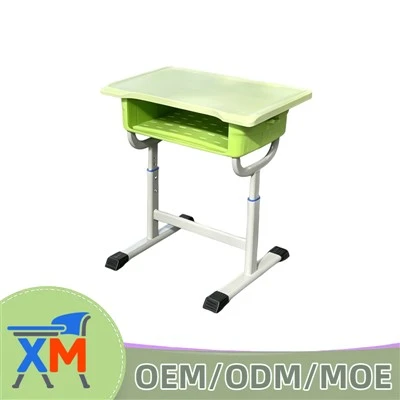
If you’re in the market for new desks, or you just want to chat about what works best for your school, feel free to reach out. I don’t do hard sales pitches, I just give real advice based on what I’ve seen work (and what’s failed) over the years. At the end of the day, we’re all on the same team here—we want the best for the kids, and that starts with having a classroom that’s set up well, with desks that work for everyone.
Dormitory Bed References
- National Center for Education Statistics. (2022). School Facilities and Classroom Resources: Desks and Seating. U.S. Department of Education.
- American National Standards Institute. (2021). Safety Standards for School Furniture (ANSI/BIFMA X5.5).
- Educational Facilities Laboratories. (2020). Total Cost of Ownership for K-12 Classroom Furniture.
- Occupational Safety and Health Administration. (2019). Ergonomic Guidelines for Student Desks and Posture.
Shanghai Xinmu Industrial Co., Ltd.
We are one of the most professional school desk manufacturers and suppliers in China. With abundant experience, we warmly welcome you to wholesale customized school desk at competitive price from our factory. If you have any enquiry about pricelist, please feel free to email us.
Address: 3rd Floor, NO.5# Building, No. 288 Rongxing Road, Songjiang District, Shanghai
E-mail: sales@xinmugroup.com
WebSite: https://www.xinmufurniture.com/
