If you’ve ever messed around with organic synthesis (or even just seen a drug commercial, let’s be real), you’ve probably stumbled across thiazoles without even noticing. They’re those five-membered rings with a sulfur and a nitrogen stuck together—kinda wonky, super reactive, and honestly the unsung heroes of a ton of chemistry I work with every day. For me, running a thiazole supply, I get asked all the time: “What’s the big deal with these little rings anyway? Why do so many chemists beg for a specific batch last minute?” Today, I’m breaking that down—no stuffy jargon, just the actual ways thiazoles get used in synthesis, and why you might want to keep a good supplier on speed dial. Thiazoles
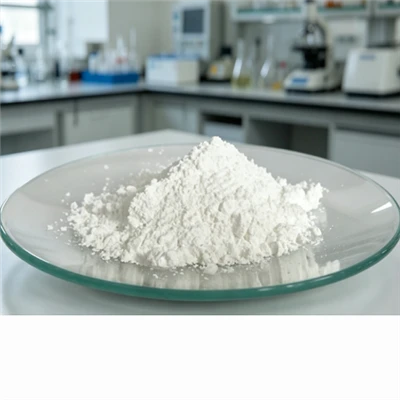
First off, let’s set the scene: thiazole’s structure is what makes it such a workhorse. The sulfur gives it a cozy, electron-rich spot, and the nitrogen adds a tiny bit of pull that makes the ring tweakable—like, you can plop different groups on any corner and totally change what it does. Most people know it for drugs, but organic synthesis (the messy, middle step before a drug hits a shelf) is where it really shines. Let’s start with the big one: building heterocyclic cores, the backbone of like 70% of pharma molecules.
Wait, let’s be specific here. Ever heard of epothilones? Those are anti-cancer drugs that mimic Taxol but work on some Taxol-resistant tumors. The key to their whole biological activity? A thiazole ring in the middle of their structure. Back in the 90s, when chemists were trying to make epothilones in a lab, they couldn’t just toss in a random ring—they needed something stable enough to hold up through all the weird reactions you do to stick a dozen parts together, but also reactive enough to link up other bits. Thiazole pulled that off perfectly. Its nitrogen lets you tune its reactivity—if you make it a thiazolium salt (add a little positive charge), it becomes a total rockstar for those coupling reactions. And get this: we supply those thiazolium salts all the time to synthesis teams. Half the time, they’ll order a custom batch because their process needs a specific alkyl group on the nitrogen to make the reaction yield higher.
Next up: natural product synthesis, which is basically making complex molecules that plants or fungi make, to study them or make them in bigger amounts. A lot of these natural products have thiazoles because organisms love them too—they’re stable but not boring, evolution picked ’em. Take pederin, a super toxic compound from rove beetles that’s being studied as an anti-cancer agent. The entire synthesis of pederin relies on a thiazole intermediate as a linking point between two large fragments. Why? Thiazole has this unique ability to do something called “C-H activation” without a crazy catalyst. C-H activation is huge right now in organic synthesis because it lets you skip steps—usually, you have to pre-add a reactive group like a chlorine to stick two molecules, but with thiazole, you can just grab a random hydrogen on the ring and connect. That cuts down waste and time, which every chemist will tell you is the equivalent of gold in a lab. I’ve had a client email me at 2 a.m. saying they messed up their C-H activation step and needed a fresh batch of thiazole yesterday—turns out, it’s that critical.
Then there are materials, not just drugs. Wait, yeah—thiazoles are popping up in organic semiconductors, the stuff that makes OLED screens and solar panels work. Because the ring’s structure lets electrons move through it really well, but you can tweak it by adding different side groups. For example, some researchers are using thiazole-based polymers in flexible solar cells because they’re light, bendable, and hold up way better than old silicon stuff. How does that tie to organic synthesis? You’re building those polymers monomer by monomer, and thiazole monomers are a core part of the chain. I supply a lot of these monomers to material science labs, not pharma. Last quarter, I had a university lab order 50 kg of a 2-amino thiazole derivative to test in their new solar cell material. That’s not a tiny batch—they needed it to make enough panels for their pilot study. And let’s be real, if the thiazole isn’t pure, the whole semiconductor fails. So that’s where a good supplier matters—you can’t cut corners on purity here.
Wait, let’s not sleep on agrochemicals either. Pesticides, fungicides, herbicides—lots of them use thiazoles because they’re specific to certain pests and don’t mess up plants as much as old chemicals. The synthesis of, say, a fungicide that stops powdery mildew on grapes relies on a thiazole intermediate to build the active ingredient. Thiazoles bind to specific enzymes in fungi that plants don’t have, so you can make a chemical that’s safe for crops but kills the bad stuff. A lot of agrochemical synthesis teams hit me up because they have to scale up production fast during growing season—they can’t wait weeks for a custom batch, so we keep stock of common thiazole derivatives just for that. It’s not just pharma or materials; thiazoles are everywhere when you need a reactive, specific building block.
Now, let’s talk about why this matters for someone who needs to use thiazoles, not just as a random fact. A lot of synthesis chemists struggle with “yield” — basically, how much of your starting material turns into the final product. Thiazoles help boost yield because they’re so versatile. For example, when you do a Suzuki coupling (super common to link two aryl groups), adding a thiazolium ligand can make the catalyst work way better, so you get way less waste product. I’ve had clients tell me they went from 35% yield to 82% just by switching their old ligand to a thiazole-based one. That’s a game-changer—less waste means less cost, faster experiments, less time waiting for results.
But here’s the thing: not all thiazoles are the same. That’s why having a reliable supplier is non-negotiable. You can’t just buy any thiazole off a random site—purity is everything. If there’s even 1% of an impurity in your thiazole, it can mess up the entire synthesis. I’ve had a client who used a cheap, untested batch of thiazole for a drug candidate, and it set their project back 6 months because the impurity reacted wrong. So when you’re ordering, you want someone who can give you specific batches, knows their stuff, can adjust the structure if you need, and delivers when you’re up against a deadline.
Let’s wrap this up. Thiazoles aren’t just another ring in organic chemistry—they’re a core building block for everything from anti-cancer drugs to solar panels to crop protection. Their unique reactivity, stability, and tweakability make them irreplaceable for so many synthesis steps. Whether you’re a pharma chemist building a new drug, a material scientist testing flexible electronics, or an agro engineer making safer pesticides, you’re going to run into thiazoles at some point.

If you’re working on a project and need high-purity thiazoles, custom batches, or reliable supply for your synthesis—hit us up.
Crosslinking Agent References
- Joule, J. A., & Mills, K. (2010). Heterocyclic Chemistry (5th ed.). Wiley-Blackwell.
- Zhang, Y., et al. (2018). Thiazole-based heterocycles in medicinal chemistry: Advances and applications. European Journal of Medicinal Chemistry, 150, 960-985.
- Facchetti, A. (2011). Thiazole-containing materials for organic electronics. Chemistry of Materials, 23(3), 733-758.
- Tamura, T., et al. (2007). Total synthesis of epothilones: A review. Natural Product Reports, 24(5), 1056-1077.
- Schrader, T., & Rettig, S. (2004). Thiazolium salts as versatile catalysts in organic synthesis. Synthesis, 2004(10), 1611-1630.
Heze Great Bridge Chemical Co., Ltd.
With abundant experience, we are one of the most professional thiazoles manufacturers and suppliers in China. We warmly welcome you to buy high quality thiazoles in stock here and get pricelist from our factory. Good service and reasonable price are available.
Address: No.1679 Renmin Road,Heze City,Shandong,China
E-mail: export@greatbridge-chem.com
WebSite: https://www.greatbridgechem.com/
