Hey there,
If you’re in the market for ultra thin relays (UTRs), you’ve probably asked this at least once: “Do these tiny power switches actually come in different coil voltages?” As a UTR supplier, I get this question nonstop—so let’s break it down straight, no corporate jargon, no sales fluff. Ultra Thin Relay

First, let’s set the scene: Ultra thin relays aren’t your grandpa’s big, clunky power relays. These are the slim ones, usually under 5mm thick (some even 3mm!) built for space-constrained gear—think wearables, IoT sensors, smart meters, even medical devices like portable glucose monitors. If you’re designing a gadget where every millimeter counts, a one-size-fits-all coil won’t cut it, right? So let’s talk about why coil voltage variety matters, how UTRs are actually made to support different voltages, and what that means for you.
Why does coil voltage matter anyway? The coil is what activates the relay’s internal switch—apply voltage, the coil becomes an electromagnet, pulls the contact closed, and boom—power flows or stops. If you get the coil wrong, two things happen: either your relay won’t trigger at all, or you’ll fry the coil and waste money. For IoT devices, many run on low-voltage batteries like 3.3V or 5V. Smart home hubs might run on 12V DC. Industrial gear could jump up to 24V or even 48V. If every UTR only came in one coil voltage, designers would have to add extra circuitry to convert their power to match, which takes up space and costs more. That’s where our UTR lineup solves that problem.
Now, let’s get specific: Yes, ultra thin relays absolutely come with different coil voltages. But wait—don’t confuse “different coil voltages” with “a million random options.” We design UTR coils with precision, tailored to common use cases, so you don’t have to pick something that’s half right. Let’s run through the most common ones we stock and why they matter:
- 3.3V DC: This is the sweet spot for battery-powered IoT and wearables. Most Li-ion coin cells put out 3.0V to 4.2V, so a 3.3V coil triggers reliably without wasting power or stressing the battery. If you’re building a smart door lock that uses a CR2032 or a fitness tracker, this is your go-to. Our 3.3V UTRs have a coil resistance calibrated to draw just enough current (around 50mA) to activate without draining the battery in idle.
- 5V DC: The jack-of-all-trades for hobbyist gear, educational robots, and entry-level industrial sensors. A lot of prototyping boards (Arduino, Raspberry Pi) run on 5V, so pairing a 5V coil UTR cuts down on wiring mess. We see this a lot with small automation tools like desk lamp dimmers or classroom temperature controllers.
- 12V DC: For smart home devices that plug into mains—like smart thermostats, water leak sensors, or outdoor security cameras. These often have a 12V power adapter, so a 12V coil means no extra conversion circuit needed. Our 12V UTRs are tested to handle constant on/off cycles, which is key for devices that run 24/7.
- 24V DC: Industrial gear’s go-to. PLCs, factory automation sensors, and medical devices like portable defibrillator backups use 24V because it’s low enough to be safe for industrial wiring, but high enough to power longer-distance relays without voltage drop. Our 24V UTRs have reinforced coil insulation to handle the harsher environments of factories or labs.
You might be wondering—how do we fit different coils into such a slim form factor? That’s the trick with UTR manufacturing. Traditional thick relays wind the coil around a big iron core, but UTRs use a flat, stamped iron core and thin wire windings (ultra-fine copper wire, like 42-gauge, that’s barely thicker than a human hair). We adjust the number of windings and the wire gauge to hit different voltages without making the relay thicker. For example, a 3.3V coil needs more fine windings to get the right magnetic pull, while a 24V coil uses thicker wire and fewer windings so it doesn’t need as much current. We can even do custom coils for unique projects—if you need a 9V or 18V coil for a niche medical device, just hit us up.
Wait, but let’s talk about a common mistake designers make: assuming any coil voltage works as long as it’s in the “right range.” That’s not true. If you apply 5V to a 3.3V coil, you’ll burn out the coil in seconds because it draws too much current. Apply 3.3V to a 5V coil, and the magnet won’t be strong enough to pull the contact closed, so your relay will fail. All our UTRs have clear labeling on the coil terminals (no vague “DC voltage” stickers) and we include test data for every coil voltage to make sure you pick the right one. We also test each relay 10,000 times to confirm the coil works consistently across temperature extremes (from -40°C to 85°C) which is critical for outdoor or industrial gear.
Another thing people ask: Do different coil voltages affect the relay’s switching capacity? Nope—at least not for the thin profile we’re going for. Our UTRs all switch up to 10A of current, no matter the coil voltage. The coil is separate from the contact’s power circuit, so changing the coil just changes what voltage triggers it, not how much power it can carry. That’s why we can offer so many coil options without compromising on performance.
Let me throw in a real quick example: A customer of ours last year was building a line of wearable insulin pumps. They needed a UTR slim enough to fit in the pump’s compact case, but also a coil that didn’t draw too much battery power. They originally tried a 5V coil, but it drained their CR2032 in 3 months, so they switched to our 3.3V UTRs. Since then, their battery life doubled, and they saved 15% on wiring because they didn’t need a voltage converter. That’s the kind of win coil voltage variety gives you.
So to circle back to the original question: Are ultra thin relays available with different coil voltages? Absolutely. From 3.3V for wearables to 24V for industrial gear, we stock all the common options, plus custom ones if you need them. The key is to pick a coil voltage that matches your device’s power source, not just whatever’s “close enough,” and to work with a supplier who’s tested their relays to work reliably.
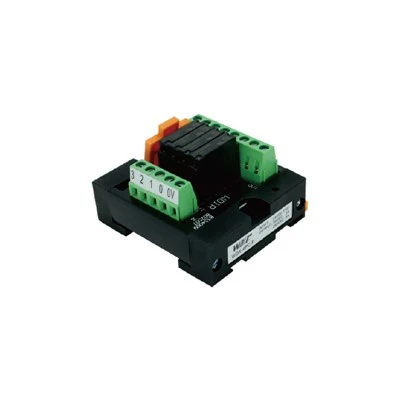
If you’re working on a project and want to check which UTR with the right coil voltage fits your specs—whether that’s a 3mm slim profile, 10A switching, or something in between—hit us up to talk through it. We don’t do generic sales pitches here, we’ll walk you through the options, answer any questions, and even send sample relays for testing. No hoops, no hidden fees, just straight talk about what works for your design.
Pull Spring Terminal References
- International Electrotechnical Commission (IEC) 61810-1:2011, Electromechanical relays – Part 1: Generic specification
- Texas Instruments, Low-Voltage Power Solutions for IoT Devices, 2022
- Industrial Electronics Society (IES), Design Guidelines for Slim-Profile Relays, 2021
- IEEE Transactions on Components, Packaging, and Manufacturing Technology, Miniature Electromechanical Relays for Space-Constrained Applications, 2020
Zhejiang Weide Electric Co., Ltd.
Zhejiang Weide Electric Co., Ltd. is one of the most professional ultra thin relay manufacturers and suppliers in China, featured by quality products and low price. If you’re going to buy the newest ultra thin relay, welcome to get free sample from our factory. We also accept customized orders.
Address: No.555, South Binhe 2nd Road, Yueqing City, Zhejiang Province, China
E-mail: zjwdir@wdirele.com
WebSite: https://www.chweide.com/
