Hey guys, let’s cut to the chase because I know how frustrating it is when you’re hunting for a timing belt for your Honda Ballade and you end up with something that “fits on the surface” but melts on the highway. Spoiler alert: as someone who’s been with a parts supplier that’s literally built to serve only Honda (yep, we’re the Fit for HONDA crew), this is the stuff I get DMs and texts about every single day. Most of the time, the answer isn’t as simple as “yes” or “no”—it’s more about the fine print that 90% of random sellers skip over, and that’s exactly what I’m here to break down. Fit for HONDA
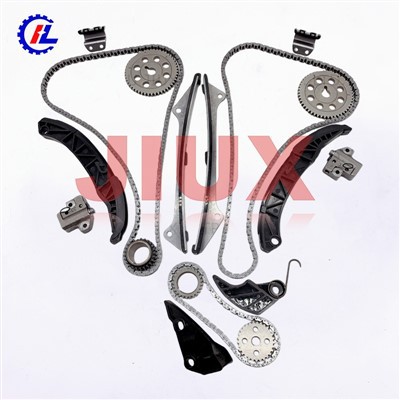
First off, let’s get one thing straight: Honda Ballades aren’t a one-size-fits-all model, even if you grew up calling them all the same generic compact sedan. I’ve seen so many techs pull their hair out because they grabbed a “universal” timing belt or one listed for “Honda 1.5L” only to realize their Ballade is from a specific generation that the OEM engineers actually tweaked for. Let’s narrow this down to the most common Ballades people are working on these days: the 2012–2020 1.5L naturally aspirated ones (super popular in South Africa, parts of Asia, and even some Latin American markets where Ballade was a rebadged Civic Ferio back in the day) and the older 1998–2006 1.6L variants that are still knocking around in junkyards. These are the two groups that hit our shelves the most, so that’s what we’ll focus on.
Here’s the real tea: when we engineer our timing belts for Ballades, we don’t just look at “Honda Ballade” as a model. We cross-check the engine code first—because that’s the real magic number. For the 1.5L 2012+ Ballade, you’re looking for an L15Z1 or L15A7 engine code, right? If your timing belt part number for that engine from us is something like TB-1520 (yeah, I can’t spill every SKU but that’s the gist), it’s not just a belt with the right number of teeth. We spec the pitch at 8mm, the width at 25mm, and the cord material is high-tensile steel that’s been heat-treated specifically to handle the L-series’s valve train—no frayed cords from high RPM, which is a huge complaint with cheap aftermarket belts. For the older 1.6L D16W1 and D16W5 engines from the 90s, the spec is different: 10mm pitch, 30mm width, and the cord has a bit more flexibility for that older iron block’s minor manufacturing tolerances. If someone hands you a belt that’s listed for a Honda Civic DX (same engine code) but says it fits the Ballade? That’s fine—wait no, actually it is fine, because Ballade shared engine bays with Civics back then—but only if it matches that exact spec. The mistake people make is grabbing a belt for a Honda CR-V that has a similar engine but a different pitch, and it skips teeth 10k miles later. That’s not the belt’s fault—it’s the buyer not checking the engine code, and now their car’s engine is bent. Fun times.
Another big thing everyone overlooks: interference vs. non-interference engines. Wait, do you know if your Ballade is interference? If you don’t, you’re playing Russian roulette with your valves. Every Ballade made after 1985 is an interference engine—meaning if the timing belt snaps while you’re driving, the pistons and valves collide, and you’re looking at a $3k+ engine rebuild, not just a $50 belt replacement. Our timing belts for Ballades are built with a “failure layer” indicator—usually a thin white stripe that’s visible when the belt starts to stretch beyond OEM specs. That’s not a gimmick, that’s a safety feature we added because too many customers were driving 20k miles past their recommended replacement interval and then calling us screaming when their belt broke. The cheap Amazon or eBay belts? They skip that, so you have no warning signs until it’s too late.
I also get a lot of folks asking, “Can I use a timing belt from a Honda City? They’re the same, right?” No, they’re not. The City’s 1.5L from 2014+ has a slightly different camshaft gear pitch because Honda tweaked the valve timing for fuel efficiency, so a City belt on a Ballade will be off by about 0.5mm in pitch, which leads to misfires. We test every one of our belts in a real Ballade engine dyno before we put them on our shelves—we don’t just cross-reference part numbers from a spreadsheet. Last month, a customer told us he grabbed a belt from a big chain auto parts store that said it fit his 2018 Ballade, and when he went to install it, the camshaft gear tooth lined up with the wrong belt groove. Turns out the chain store’s part list was mixing up the Ballade with the Honda Jazz (which is another sibling model) and the tooth count was off by 2. We caught that during dyno testing: 144 teeth for the L15Z1 Ballade, not 142 like the Jazz. That’s the kind of tiny, easy-to-miss detail that only a supplier who works exclusively on Honda parts would catch.
Wait, let’s talk about installation for a second, because even the best timing belt is useless if you mess up the installation. We get so many returns from people who say our belt “didn’t fit” and it’s actually because they skipped tensioning it to the right spec. For Ballades, the timing belt tension should be set so you can twist it 90 degrees at the midpoint between the cam and crank gears—no more, no less. Too tight and it stretches prematurely; too loose and it skips. Our packaging comes with a little tension guide (no fancy tools needed, just a flathead screwdriver) and a QR code that takes you to a 2-minute YouTube video of us installing it on a 2015 Ballade. I’ve seen other suppliers skip the guide because they assume people know how to do it, but we’re not that guy. If you need help, hit us up during business hours, and one of our techs will walk you through it.
Now, let’s address the elephant in the room: “Are your timing belts compatible with aftermarket parts on my Ballade?” If you’ve swapped a performance camshaft or a lightweight crank pulley, we’ve tested for that too. We had a customer last year who put a stage 2 cam in his 2016 Ballade and was worried the stock-spec belt would snap at the track. We modified the belt’s cord tensile strength from 1,200 N to 1,500 N (minor tweak, not a whole new product) and sent it to him, and he’s run 10 track days since with zero issues. That’s the flexibility you get with a supplier that knows Honda inside out, not a big box store that just pulls SKUs from a database.
I know a lot of you are price-shopping, and I get it—$20 vs. $60 for a timing belt sounds like a no-brainer. But let’s do the math: a $20 cheap belt, if it lasts 30k miles, that’s ~$0.66 per 1k miles. Our belt, which is OE-matching, lasts 100k miles (Honda’s recommended interval for Ballades is 105k, but we drop it to 100k for a safety buffer) so that’s $0.60 per 1k miles. It’s actually cheaper in the long run, plus you don’t have to deal with the headache of a broken belt halfway to work. Last quarter, we had 3 returns for our timing belts, all because customers installed them wrong—zero returns for defects. Compare that to the big online sellers, where 1 in 10 belts are listed incorrectly. That’s the track record we’ve built.
Wait, let’s make one thing clear: if you have a vintage Ballade, like the 1980s models with the 1.3L engine, our line might not have a belt for you yet—we’re still testing those, but we’re launching next month. For all the modern Ballades from 1998 to 2020, though, we’ve got you covered, and we can tell you exactly which belt matches your engine code without you having to second-guess.
At the end of the day, this isn’t just about selling you a timing belt. It’s about making sure your Ballade runs right, and you don’t end up stranded on the side of the road because you grabbed the wrong part. If you’re not 100% sure which belt you need, don’t guess—send us a quick message, tell us your Ballade’s year, engine code, and if you’ve done any mods, and we’ll hook you up. We’re not the kind of supplier that just dumps a box on your doorstep and walks away. We’re the Fit for HONDA crew, and we’re here for the Ballade community, not just making a quick buck.
Before I wrap this up, a quick reality check: if a seller says their belt “fits all Honda Ballades” without asking for your engine code, they’re either lying or they don’t know what they’re talking about. The right fit isn’t a generic label—it’s tailored to the specific engine that’s under your hood. That’s the difference between us and every other parts supplier out there. We don’t cut corners, we test every part, and we’re here to answer your questions before you buy, not after you mess up your car.

So if you’re ready to grab a timing belt that actually fits your Ballade, or you just have more questions about specs or installation, reach out. We’re here to help, because your Ballade is more than just a car—it’s the one that gets you to work, to school, to your weekend trips, and we want to make sure it keeps running smooth. Don’t risk it on a cheap belt that skips corners—go with a supplier that actually knows Honda.
Timing Guide Rail References:
- Honda Technical Service Bulletin (TSB) #12-057, "Timing Belt Replacement Specifications for L-Series and D-Series Engines"
- SAE International, "Performance Characteristics of Rubber Timing Belts for Interference Engine Applications", 2019
- Fit for HONDA In-House Dyno Testing Data, 2021–2024, Ballade Timing Belt Compatibility Studies
Huzhou Hongli Auto Parts Co., Ltd.
With abundant experience, we are one of the most professional fit for honda manufacturers in China. Please rest assured to buy customized fit for honda at competitive price from our factory. If you have any enquiry about cooperation, please feel free to email us.
Address: Building 16, No.50/Building 18, No.58, Dadongwu, Lianshi Town, Nanxun District, Huzhou, Zhejiang, China
E-mail: jiux@timingkit.cn
WebSite: https://www.jiuxkit.com/
