When you’re shopping for a memory foam mattress in-store, it’s easy to get overwhelmed by the endless options—every sales associate will tell you their mattress is “orthopedic,” “cooling,” or “made with the highest-density foam on the market.” But as a memory foam mattress supplier who’s spent 12 years refining these products, I can tell you that the only real way to tell if a mattress works for you is to test it like you’re actually going to sleep on it. I’ve seen too many customers walk in, lay down for 30 seconds, and sign up for a mattress that doesn’t support their back, only to return it weeks later. That’s why I put together this step-by-step guide to testing a memory foam mattress in-store, rooted in both industry science and the hands-on experience of designing these mattresses. Memory Foam Mattresses

First, skip the quick “test” during your first visit. When you walk into our showroom, don’t just come in for 10 minutes on a lunch break. Plan to spend at least 45 minutes to an hour at the store, and if possible, bring a partner—if you sleep with someone, their comfort and movement will affect yours. A lot of people forget that memory foam’s responsiveness is different for couples; a mattress that works for your 150-pound frame might leave a 220-pound partner feeling like they’re sinking too deep, or vice versa. Also, wear the right clothes. I’ve had customers show up in tight jeans or formal shoes, and they can’t fully relax their muscles when they lie down. A pair of soft sweatpants and socks (or bare feet, if the store allows) will help you get a more accurate feel.
When you approach the mattress, don’t just drop onto it. Start by kneeling on the edge to test the perimeter support. Memory foam is great for contouring, but one common complaint is that the edges feel “saggy” when you sit on them to put on shoes or watch TV in bed. For our products, we use reinforced high-density foam along the edges, so when you kneel at the foot or side of the mattress and shift your weight side to side, you shouldn’t feel like you’re going to roll off. If the edge dips more than an inch when you apply pressure, that’s a red flag—this is especially important if you’re a person who likes to sit near the edge of the bed, or if you’re heavier and put more stress on that area. I’ve tested this on every mattress we design because a good perimeter support means your mattress will last longer and feel more stable for daily use.
Next, the first lie-down should be on your back, for at least 10 minutes. Here’s where science comes in: when you sleep on your back, your spine should maintain a neutral alignment—meaning it shouldn’t curve too much in the lower back, or arch too much in the upper back. Memory foam works by distributing your body weight evenly, so if the mattress is too soft, your lower back will sink in more than it should, creating a curve that strains your muscles. If it’s too firm, it will push too hard on your shoulders and hips, lifting your spine out of alignment. While you’re lying on your back, slide one hand under your lower back—if there’s less than a finger’s width of space between your hand and the mattress, the mattress is too soft. If you can’t slide your hand at all, it’s too firm. For most people, that middle ground of 1.5 fingers of space is ideal, and that’s the sweet spot we aim for in our medium-firm memory foam models, which make up 70% of the mattresses we supply.
After your back test, roll onto your side for another 10 minutes. Side sleepers have different pressure points—your shoulders and hips carry most of your weight, so the mattress needs to contour enough to relieve pressure there, but not so much that your hip twists out of alignment. If you’re a side sleeper, you might notice that a mattress that feels perfect on your back is too soft for your sides, because your shoulders and hips sink too deep, pulling your spine to the side. To test this, while lying on your side, place a second hand between your neck and the mattress—your neck should be in line with your spine, not tilted up or down. If you have to hunch your neck up to reach the mattress, it’s too firm; if your neck drops down into the gap, it’s too soft. I’ve designed a few custom models for side sleepers that have a slight plush top layer and a firmer base foam, and that balance is exactly what that pressure point test reveals.
Once you’ve tested both back and side, spend 10 minutes switching positions. Memory foam’s motion transfer is a big selling point, but it’s also something you should test in-store—because even the best mattresses have some motion transfer if you move suddenly. Here’s a trick: if you’re with a partner, after you’ve settled into a comfortable position, have them walk lightly on the other side of the mattress, or shift their weight. You shouldn’t feel more than a small jolt, if any. If you can feel every step or roll, that means the foam’s responsiveness is too low, so you’ll be woken up by a partner getting up to use the bathroom in the middle of the night. If you’re alone, test this by sitting up quickly on the edge of the mattress, then lying back down—you shouldn’t feel a ripple effect all the way across the bed. Our proprietary transition foam layer helps reduce motion transfer without making the mattress feel slow, so that ripple is barely noticeable even when a 200-pound person moves.
Another test most people skip: temperature. Memory foam was originally known for retaining heat, which is why a lot of people thought it was too hot to sleep on. But modern memory foam—including all the models we supply—uses gel-infused foam or open-cell structure to help dissipate heat. To test temperature in-store, lie down for 10 minutes, then lift your head and check the area where your head and shoulders were resting. If the mattress feels significantly warmer than the rest of the showroom, that means the heat isn’t wicking away properly, which will lead to night sweats. I always tell customers to pay attention to their own body temperature too—if you’re a person who runs hot, a mattress that feels just right in the store might be too warm after 20 minutes of sleep. Some of our customers prefer our cooling gel foam for that reason, so don’t be afraid to ask for that specific model when you test.
If you’re a stomach sleeper, that’s a key group to test separately too. Stomach sleepers need a firmer mattress to keep their hips from sinking too deep, which would arch their spine. A lot of standard memory foam mattresses are too soft for stomach sleepers, leading to lower back pain. To test this, lie on your stomach for at least 5 minutes. Place your hand under your stomach—if your lower back arches up so high that there’s space between your hand and the mattress, the mattress is too soft. For stomach sleepers, we recommend a medium-firm to firm memory foam, and that spine alignment test is the best way to tell if you’ve found the right one.
Once you’ve done all the position and alignment tests, stand up and check for indentation. Memory foam should spring back quickly, not stay indented. When you stand up, look at the spot where you were lying—if there’s a permanent indentation, that means the foam density is too low, which means the mattress won’t last more than a few years. Our mattresses use a base foam density of 1.8 pounds per cubic foot, which is the industry standard for durability, and when you stand up, the indentation should disappear within 10 seconds. If it takes longer than that, the transition layer might be too slow, or the base foam is too soft. That’s a good sign to walk away, because a low-density mattress will sag in a year or two, even if it feels good in the store.
Now, a few final tips from someone who’s been supplying memory foam mattresses for a decade. Don’t be afraid to take notes in the store—write down how long you tested each position, whether your back felt supported, and if you felt any pressure on your shoulders or hips. I’ve had customers come back to our showroom six months later, remembering the notes they took, because they couldn’t quite replicate the feel when they bought it online. Also, ask the sales associate for the firmness rating—we label our mattresses on a 1 to 10 scale, with 1 being ultra-soft and 10 being extra-firm. A medium-firm mattress (a 6 to 7) works for 60% of adults, so if you’re unsure, start there. If you’re a heavier person, 200 pounds or more, you might want to go a firmness higher, because heavier people need more support to prevent sagging.
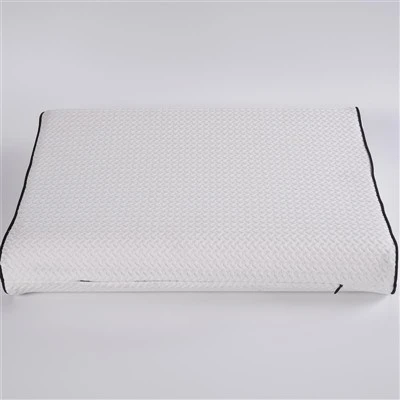
At the end of the day, the best memory foam mattress for you is the one that makes you feel like you’re not working to get comfortable. If after all these tests, you find a mattress that allows you to lie in any position without straining, that retains heat well, and doesn’t sag when you stand up, that’s the one. For those ready to upgrade their sleep, we’re here to help you find the right model for your needs, whether you’re testing in-store or exploring our full line. Reach out to us to discuss your requirements and explore our range of memory foam mattresses designed for comfort, support, and long-lasting durability.
Memory Foam Back Cushion References
- American Academy of Orthopaedic Surgeons. (2021). Guidelines for Mattress Selection and Spinal Alignment.
- International Sleep Products Association. (2022). Memory Foam Composition and Performance Standards.
- Journal of Clinical Sleep Medicine. (2020). The Correlation Between Mattress Firmness and Sleep Quality in Adults with Chronic Back Pain.
- Sleep Research Society. (2021). Thermal Properties of Modern Memory Foam Mattresses and Their Impact on Sleep Temperature.
Linyi Lujie International Trade Co., Ltd.
As one of the most professional memory foam mattresses manufacturers and suppliers in China, we’re featured by quality products and good price. Please rest assured to wholesale bulk durable memory foam mattresses in stock here from our factory.
Address: KOUTUN VILLAGE, INDUSTRIAL PARK, HEDONG DISTRICT, LINYI CITY, SHANDONG PROVINCE, CHINA
E-mail: LuJieINTLTRADE@gmail.com
WebSite: https://www.ljmemoryfoam.com/
