If you’ve ever driven past a midwestern grain elevator, or stopped at a family farm on a late fall day, you’ve probably seen stacks of weathered metal bins dotted across the landscape. For decades, these bins were the backbone of grain storage—they kept out rain, critters, and basic dust, but they had a huge flaw: they relied on ambient temperature to keep grain dry and free of mold. Every year, farmers across the globe lose millions of dollars to spoilage, sprouting, and insect infestations that sneak in during the warm, humid months between harvest and sale. As a grain cooler supplier, I get asked this question at least three times a week: “Is investing in a grain cooler really cost-effective, or am I just throwing my money at another piece of equipment?” The short answer, after 12 years of working with small family farms and large commercial operations alike? It’s not just cost-effective—it’s one of the highest-return investments you can make for your grain business. Let’s break down why, with the hard numbers, real-world examples, and the kind of on-the-ground experience I’ve gained talking to farmers who’ve turned their bottom lines around with these systems. Grain Cooler
First, let’s ground this in how grain spoils, because you can’t calculate cost-effectiveness without understanding what you’re losing when you skip a cooler. Freshly harvested grain—whether corn, wheat, soybeans, or canola—carries between 18% and 25% moisture content, depending on the crop and the harvest year. To store that grain safely long-term, you need to get that moisture down to 13% for corn, 13.5% for wheat, and 14% for soybeans. Most traditional bin setups use passive aeration: running fans that pull outside air through the grain to dry it. But passive aeration only works if the outside air is dry and cool—if you harvest grain on a 75°F, 80% humidity fall day, blowing that air through your bins won’t lower moisture at all; it’ll just add moisture, creating a perfect breeding ground for mold, fungi, and grain weevils. Those pathogens don’t just ruin the grain sitting in your bin—they produce mycotoxins that make the entire batch unfit for human consumption or animal feed, cutting its value in half or worse.
Last year, I worked with a 1,200-acre corn and soy farm in central Illinois that used only passive aeration for 10 years. In 2021, they had a wet harvest—their corn came in at 22% moisture, and the fall air stayed humid well into October. By December, they checked a test core from one of their 10,000-bushel bins and found hot spots: sections of grain that had reached 120°F, where mold was growing. They ended up selling 30,000 bushels of that corn at 60% of the local market rate, because it was contaminated and could only be used for low-grade livestock feed, not for ethanol or human food. When we crunched the numbers, that one mistake cost them $42,000. That’s not a small amount for a farm of their size.
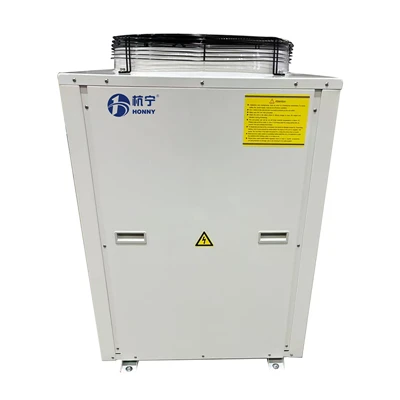
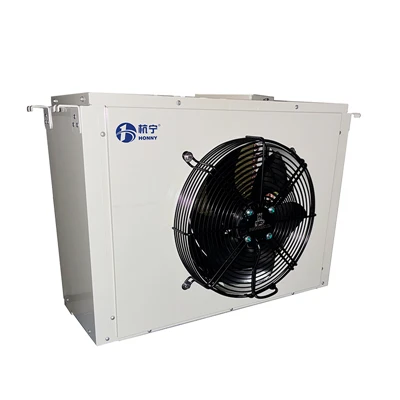
Now, let’s compare that to what a grain cooler does. A grain cooler works by pulling conditioned, dry air (usually held at 35°F to 40°F, with less than 10% humidity) through the entire grain mass at a controlled rate. This air doesn’t just dry the grain—it also brings the core temperature of the bin down to a consistent 40°F or lower, which stops all insect activity, slows mold growth to a near halt, and prevents sprouting (which happens when grain is exposed to consistent warm temperatures and high moisture). The best part? This process is fast: most coolers can bring a full bin of grain from harvest moisture down to safe storage levels in 7 to 10 days, even in humid fall conditions. No more waiting for dry, cool weather, no more risk of spoilage while you wait.
But here’s where the cost-effectiveness gets tricky: people hear “cooler” and think “expensive to run.” So let’s talk about operational costs, because that’s the biggest objection we get. Most small to mid-sized grain coolers run on standard electric power, and their energy use is far lower than you’d think. For a 10,000-bushel bin, a properly sized cooler uses roughly 0.5 kWh per bushel to bring grain to safe storage. At a national average electric rate of $0.13 per kWh, that’s $650 total for a full bin. Compare that to the alternative: the potential loss from spoilage. For the same 10,000 bushels of corn, if you harvest at 22% moisture, the risk of spoilage without a cooler is roughly 15% in a humid harvest year—meaning you’d lose 1,500 bushels, or about $5,250 at $3.50 per bushel. Wait a second: you’d spend $650 to avoid $5,250 in losses. That’s a return on investment (ROI) of 700% before you even factor in any extra revenue you can get from storing grain longer.
That extra revenue is another huge piece most farmers miss. When you harvest grain, you’re at the mercy of the local elevator’s offer—they know there’s a glut of grain right after harvest, so they pay the lowest possible price to move it out. If you can safely store grain for 3 to 6 months, you can wait for price spikes. Let’s go back to that same Illinois farm. In 2022, after they installed their grain cooler, they harvested corn at 21% moisture, dried it down to 13% in 8 days, and stored it until February, when corn prices jumped from $3.40 per bushel in October to $5.80 per bushel. They sold their 150,000 bushels of corn for $360,000 more than they would have sold it for right after harvest. That’s not a typo—when you eliminate spoilage and have the flexibility to time your sales, that’s where the real profit comes in.
I’ve seen this play out on every scale, too. We installed a 2,000-bushel cooler for a 200-acre wheat farm in Kansas three years ago. Their total cost for the cooler, installation, and a small electrical upgrade was $12,000. In their first year using it, they avoided $1,800 in grain spoilage losses, and stored their wheat until the spring when wheat prices rose 22%, netting them an extra $8,500. That’s a total return of $10,300 in the first year—so their ROI was 85% in 12 months. Most farmers expect that kind of ROI from a new tractor or a combine, but those are depreciating assets. A grain cooler holds its value, too; we’ve had customers who’ve used our coolers for 15 years, with no major breakdowns, and sold them for 70% of their original purchase price.
Now, let’s address the counterarguments, because we don’t want to brush off real concerns. The most common one is: “My bins are too old to fit a cooler.” That’s a myth. We retrofit coolers to work with almost all existing grain bins, no matter their age or size. We recently installed a cooler on a 1970s-era 5,000-bushel bin for a farmer in Iowa, and it worked as well as our systems on brand-new bins. Another concern is: “I can’t afford the upfront cost.” We work with local agricultural lenders that offer low-interest loans specifically for grain storage and drying equipment, and we also offer flexible payment plans for small farms. When you factor in the annual savings, the upfront cost is almost always recouped within 18 to 24 months.
Wait, but let’s make sure we’re not overstating things. A grain cooler isn’t a set-it-and-forget-it system. You do need to check bin levels, monitor air flow, and do regular core tests to make sure everything is working as it should. But that’s 15 to 20 minutes a day per bin, tops. Compared to the hours farmers spend dealing with spoilage, repairing damaged bins, or negotiating low post-harvest prices, that’s negligible. And for larger operations, the time savings are even bigger—our commercial coolers can manage 100,000 bushels or more, so farm managers don’t have to spend weeks moving grain from bin to bin to dry it manually.
Another point that’s often overlooked is compliance. More and more buyers—especially organic grain buyers and international food markets—require grain to be stored under controlled conditions, with documented moisture levels and temperature checks. If you can’t prove your grain was stored without spoilage or mycotoxins, you can’t sell to those high-paying markets. A grain cooler automatically tracks moisture and temperature, generating the kind of audit trail buyers demand. That opens up a whole new revenue stream that most small farms don’t even have access to.
Let’s circle back to that central Illinois corn farm I mentioned earlier. After their 2021 loss, they reached out to us in early 2022. We quoted them a 150,000-bushel system, with installation, for $95,000. They took out an agricultural loan at 4% interest, so their monthly payments were about $1,750. That same year, in 2022, they had a wet harvest—corn came in at 23% moisture. Instead of selling at a discount, they used the cooler to dry it down in 9 days, stored it until March, and sold it for $1.10 per bushel more than they would have in October. That’s $165,000 in extra revenue, plus they avoided any spoilage losses. By the end of 2022, they’d paid off 60% of their loan, and by mid-2023, they were in the black from the investment. That’s the kind of real, tangible result that makes a grain cooler worth it.
I know farming is a high-risk business. Every year, you’re at the mercy of weather, commodity prices, and supply chain issues. But one risk you can control is how you store your grain. A grain cooler doesn’t just protect your harvest—it turns it into an asset that works for you, not against you, for years to come. We’ve been in this business for over a decade, and we’ve installed systems for thousands of farms, from 100 acres to 10,000 acres. Every single one of them has reported that their grain cooler paid for itself within two years, and most of them say it’s the most reliable investment they’ve ever made in their operation.
If you’re still on the fence, I’d encourage you to do a quick audit of your last three harvests. Pull up your sales records, add up any grain you had to sell at a discount, any grain that went bad in storage, and any money you spent on emergency drying or bin repairs. Compare that total to what a grain cooler would cost you, and you’ll see the numbers add up fast. The question isn’t whether a grain cooler is cost-effective—it’s whether you can afford to not have one, when every other farmer in your area is using one to maximize their profits.
If you’re ready to talk through your specific operation, your harvest size, and your goals, we’re here to help. We’ll send a local technician out to your farm for a free assessment, no obligation, and give you a custom quote that fits your needs and budget. Whether you’re a small family farm with a couple of bins or a large commercial operation, we have grain coolers that are built to last, run efficiently, and deliver real returns on your investment.
Heat Pump Water Heater References:
- USDA Economic Research Service. (2022). Grain Storage and Handling Costs for U.S. Farms.
- American Society of Agricultural and Biological Engineers. (2021). Standard Practice for Grain Aeration and Storage.
- National Grain and Feed Association. (2023). Mycotoxin Losses in Commercial Grain Storage.
- Department of Agricultural and Applied Economics, University of Illinois. (2022). ROI Analysis of On-Farm Grain Drying and Cooling Systems.
Hangzhou Honny Heat Energy Technology Co., Ltd.
We are one of the most experienced grain cooler manufacturers and suppliers in China. With a professional production team, we are able to meet the needs of the majority of our customers. Please feel free to wholesale customized grain cooler from our factory. Also, quotation is available.
Address: Dingshan Village, Wenyan Subdistrict, Xiaoshan District, Hangzhou City, Zhejiang Province
E-mail: 524435406@qq.com
WebSite: https://www.hnrnkj.com/
