If you’ve ever ordered a roll of flexible packaging for snacks, frozen meals, or even the label on a detergent bottle, you’ve almost certainly encountered CPP film—cast polypropylene, the workhorse of flexible packaging. But if you’ve shopped around for a matte finish for your next packaging run, you’ve probably seen two terms thrown around interchangeably: matte CPP and frosted CPP. As a matte CPP film supplier who’s worked directly with packaging converters and brand owners for over a decade, I can tell you that mixing these two up is one of the most common, and most costly, mistakes people make when specifying a film for their products. Matte CPP Film
I learned the hard way, early in my career, what that confusion does. A few years back, a craft cookie brand came to me, frustrated because their new packaging kept smudging when they printed their custom logo on it. They’d bought a roll of “frosted CPP” from a competitor, assuming it would give them the soft, non-glare look they wanted for their artisanal brand. But when they tried to print their matte black text and gold foil accents, the ink ran, the foil didn’t adhere, and even a light finger rub left smudges that made their cookies look cheap. Turns out, the competitor had sold them a low-grade frosted CPP that was designed for decorative, not functional, packaging. That experience taught me that the difference between matte and frosted CPP isn’t just aesthetics—it’s rooted in how each film is made, what it’s designed to do, and how it performs in the real world.
Let’s start with the basics: both films are made from the same base material, polypropylene. The difference lies in the surface structure, and that difference comes from the manufacturing process—a detail most suppliers gloss over when listing their product specs.
Matte CPP film, the product our team specializes in, is engineered from the core to have a consistent, low-glare, smooth-yet-textured surface that’s built for functionality. We make it using a process called surface texturing via controlled corona treatment and additive integration. Here’s how that works: during the cast extrusion process, we add proprietary slip and anti-block additives to the polypropylene resin. These additives migrate to the film’s surface evenly, creating tiny, uniform peaks and valleys that scatter light instead of reflecting it. The corona treatment step, which most matte CPP suppliers invest in, goes a step further: it oxidizes the surface to make it receptive to inks, adhesives, and coatings, so that printing on matte CPP doesn’t smudge or run. The key here is uniformity: every square inch of a roll of matte CPP has the same texture, the same surface energy, and the same functional properties. That’s why matte CPP is the go-to for brands that need packaging that works as hard as it looks—think frozen food bags, snack wrappers, and stand-up pouches that have to hold their shape through distribution.
Frosted CPP, on the other hand, is made with a completely different, far simpler process. Instead of adding controlled additives or performing surface treatment, most frosted CPP producers create their finish by embedding tiny, irregularly shaped particles into the polypropylene resin during extrusion. These particles are usually just inert fillers, like calcium carbonate or talc, that break the surface into tiny, uneven bumps and valleys. The result is a soft, semi-opaque, foggy look that many people mistake for matte. But the tradeoffs are massive. First, the surface energy of frosted CPP is usually too low for proper ink adhesion. The irregular fillers don’t bond with treatment the same way additives do, so if you try to print on frosted CPP, even a high-quality ink will sit on the surface, not absorb into it. That leads to smudging, fading, and cracked prints by the time the product hits store shelves. Second, the irregular texture means frosted CPP is more prone to tearing under stress—something that’s a disaster for a frozen food bag or a stand-up pouch that has to be filled and sealed at high speed. Finally, because the particles are embedded in the resin, frosted CPP is less recyclable than matte CPP, since the additives can contaminate other polypropylene recycling streams.
Let’s break down the practical implications of these differences, because that’s what matters most when you’re choosing a film. If you’re a brand owner launching a line of premium chocolate, you might think a frosted finish would feel more luxurious than a glossy one. But if you’re printing your brand name directly on the wrapper, the smudging and poor adhesion of frosted CPP will make that luxury look cheap. I’ve had dozens of high-end confectionery clients switch to matte CPP specifically because the consistent surface treatment lets them print vibrant, sharp colors that don’t rub off during shipping. The same goes for frozen ready meals: a stand-up pouch made with matte CPP can withstand the freezing and thawing process without cracking, while a frosted CPP pouch will often split along seams when dropped, leading to product waste and returns.
Another big difference is performance in converting processes. Converters run films through high-speed printing presses, lamination machines, and bag-forming equipment, and the uniformity of matte CPP makes all the difference here. Our matte CPP has a consistent coefficient of friction (COF)—a measure of how easily the film slides against other surfaces—so it feeds through printing presses smoothly, no jams or misalignment. Frosted CPP, with its irregular particle structure, has a much higher and more variable COF, which can cause jams on production lines, slowing down conversion runs and costing thousands of dollars in downtime. That’s why most converters we work with specify matte CPP for their functional packaging lines, not frosted.
Durability is another key point. I’ve had clients test both films by dropping a packaged product from eye level, a common test for distribution packaging. A matte CPP bag will usually bounce back with no damage, because its consistent texture and treated surface make it more tear-resistant. A frosted CPP bag, by contrast, will often develop a tear along the seam or a puncture from the product inside, because the embedded particles weaken the film’s structure. For heavy products like pet food or rice, that durability gap isn’t just a convenience—it’s a way to prevent costly product loss.
A common question I get from new clients is: can’t I just get the soft look of frosted CPP with a matte finish? The short answer is yes, and that’s exactly what matte CPP is designed for. The matte finish is the aesthetic, but it’s built on top of functional properties that frosted CPP lacks. Some low-quality suppliers will try to pass off frosted CPP as matte CPP to cut costs, so it’s always a good idea to ask for lab test results: if a supplier can’t provide you with surface energy values, COF ratings, or printing adhesion test data, that’s a red flag that you’re looking at frosted CPP, not true matte CPP.
Let’s talk about the environmental angle, too, because that’s a big concern for most brands now. Matte CPP films, especially the grades we produce, are designed to be mono-material, meaning they’re made entirely of polypropylene and easy to recycle in most curbside or industrial recycling programs. The additives we use to create the matte finish are compatible with standard polypropylene recycling streams, so they don’t contaminate batches of recycled resin. Frosted CPP, with its embedded inorganic particles, is often not recyclable, because those particles can’t be separated from the polypropylene during the recycling process. That’s a critical point for brands that are setting sustainability goals—choosing matte CPP over frosted CPP isn’t just a performance decision, it’s a step toward reducing your packaging’s environmental footprint.
I’ll be honest: I understand why there’s confusion. The two finishes look similar to the untrained eye, and many suppliers don’t take the time to explain the differences. At the end of the day, frosted CPP is a decorative film, good for things like promotional labels or wrapping for non-functional items, but it’s not built for the rigors of retail, shipping, and consumer use that most brands rely on. Matte CPP, by contrast, is a functional packaging material that combines the soft, non-glare look you want with all the performance properties you need to get your product from the factory to the consumer’s hands in perfect condition.
I’ve spent years refining our matte CPP formulations to work across every type of packaging, from small snack wrappers to large stand-up pouches for frozen meals. We test every batch before it leaves our facility to make sure it has consistent surface energy, low COF, and excellent ink adhesion—something most frosted CPP suppliers don’t do. For example, last year we worked with a frozen vegetable brand that had been using frosted CPP for their pouches, only to see 8% of their pouches develop tears during distribution, leading to $20,000 in product returns. Switching to our matte CPP cut those returns to less than 1%, and their print quality improved so much that their sales increased 12% in six months because customers could clearly read the product ingredients and cooking instructions on the pouch.
That’s the kind of impact that understanding the difference between these two films can have on your business. It’s not just a technicality—it’s a choice that affects your production costs, your product’s durability, your brand’s reputation, and even your sustainability goals. If you’re in the market for a matte finish for your packaging, don’t settle for a film that looks similar but doesn’t perform. Make sure you’re working with a supplier that can explain the manufacturing process, provide test data, and stand behind their product.
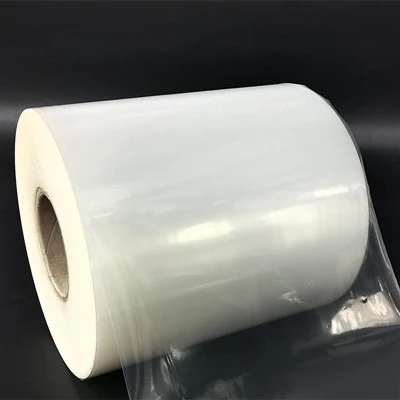
If you’re ready to spec matte CPP for your next packaging run, or if you’re still unsure which film is right for your needs, I’m here to help. We’ve worked with brands of all sizes, from small craft startups to large national retailers, to find the right matte CPP solution for their products. We’d be happy to send you sample rolls, share our test data, or walk you through how our film can improve your packaging’s performance.
Standard Polyethylene Film Reference:
- Han, J. et al. (2020). “Surface Properties of Cast Polypropylene Films for Flexible Packaging.” Journal of Plastic Film & Sheeting, 36(4), 387-405.
- European Plastics Converters (EuPC). (2022). Mono-Material Flexible Packaging: Performance and Sustainability Benefits.
- Packaging Association of America. (2021). Best Practices for Specifying Flexible Packaging Films for High-Speed Converting.
Qingzhou Huiyuan Packaging Materials Co., Ltd.
As one of the most professional matte cpp film suppliers in China since 1997, we’re featured by quality products and good service. Please feel free to buy cheap matte cpp film made in China here from our factory. For price consultation, contact us.
Address: Naoshan Industrial Park, Shaozhuang Town, Qingzhou City, Weifang, Shandong Province, China.
E-mail: 15864598133@163.com
WebSite: https://www.huiyuanfilms.com/
