Hey everyone, thanks for stopping by. As an injection molding supplier, I get asked this question all the time from clients, new and old: “How do you keep tolerances so tight? I’ve had parts that just won’t line up, no matter what I try.” It’s not magic, honestly—tolerance control in injection molding is equal parts prep, process tweaking, and knowing when to adjust. I’ve been doing this for 12 years, and I still mess it up sometimes, but these are the things that’ve kept our parts hitting specs 9 out of 10 runs. Injection Molding

First off, let’s cut to the chase: what even is tolerance? If you’re not a mold nerd, tolerance is just the “acceptable range” a part dimension can be. Like, if you need a hole to be 10mm, a tolerance of ±0.05mm means 9.95mm to 10.05mm is cool, anything outside that is a scrap or rework. Messing this up is expensive—for you, and for us. A part that’s just 0.1mm off can’t snap into your assembly, and that delays your production. So we’re all on the same page here.
The biggest mistake I see people make is waiting until the mold is built to think about tolerance. No lie—prep work before mold making is 70% of the battle. A lot of clients come to us with a drawing that just says “10mm hole” with a ±0.5mm tolerance, and that’s a problem. Why? Because not every plastic material can hold that tight a range. Soft plastics, like TPE or LDPE, stretch way too easy. A 0.05mm tolerance on TPE is almost impossible without extra cost. We’ve got a chart we send clients that breaks this down, but the main thing is: match your tolerance to your material. Rigid plastics, like ABS or polycarbonate, are way more consistent. We can hit ±0.02mm on ABS all day, but don’t ask that from silicone.
Then there’s the mold itself. Duh, the mold is the core of the part. If the mold’s dimensions are off, nothing else fixes it. A lot of shops cut corners on mold material to save cash—we use P20 tool steel for most molds, and for tight tolerances, we even use H13. These steels don’t warp as they heat and cool, so the mold cavity and core stay the same size every run. Also, we machine the mold with CNC mills that have precision of ±0.01mm. Cheaper shops might use EDM that’s okay for rough cuts, but for tight features, it’s just not consistent. We also do a “test mold” before full production—run 5-10 parts, measure every dimension, tweak the mold if something’s off. We’ve had molds that looked perfect on paper, but the cavity shrank 0.1mm when we heated it. Catch that before 10,000 parts are bad, and you save everyone a ton of money.
Once the mold’s good, the process is next. Even a perfect mold will spit out garbage if you run it wrong. The big three factors here are temperature, pressure, and cooling time. Let’s start with material temperature. If you heat plastic too much, it expands, and when it cools, it shrinks unevenly. Too cold, and it doesn’t fill the mold properly, leading to warped parts. We use temperature controllers that hold the barrel temp within ±5°C—no guessing here. Same with mold temperature: if the mold’s too cold, the plastic cools fast on the outside, trapping heat inside, which makes the part warp. We regulate mold temp with water lines that keep it within ±2°C. I’ve seen shops skip this and just run cold water, and the parts come out all twisted—tolerance goes out the window.
Pressure is another big one. Injection pressure is how hard you push the molten plastic into the mold. Too low, and the part is short, with thin spots that shrink. Too high, and the plastic overfills the mold, or the mold stretches a little, so the part is bigger than it should be. We use pressure sensors in the barrel and the mold cavity that let us adjust pressure on the fly. For example, if we’re making a small gear that needs a tight tooth spacing, we set the injection pressure to 800 psi, and hold pressure for 10 seconds after the mold is full. Hold pressure is key—this is when you pack extra plastic into the mold to make up for shrinkage as it cools. Skip that, and the part will shrink 5-10% depending on the plastic. For ABS, that’s about 0.5mm on a 10mm part—easy to blow a tolerance if you don’t hold pressure.
Cooling time ties everything together. If you take the part out of the mold too soon, it’s still soft, so it deforms when you eject it. If you leave it in too long, you waste time, but also, if the cooling is uneven (like one side of the mold has better water flow than the other), the part cools differently, leading to warpage. We design mold cooling lines to run along every big dimension—for a 200mm long part, we have cooling lines every 50mm. That way, both sides cool at the same rate. We also do a cooling time test: leave the part in for 15, 20, 25 seconds, measure it each time, and stop when the dimensions stop changing. No guesswork, no cutting corners here.
Then there’s post-processing, which a lot of people forget. Even if the part comes out perfect, how you handle it after matters. If you stack parts too hard, or drop them, they bend. Also, some plastics absorb moisture—like nylon, if it’s wet, it swells. So we dry all hygroscopic plastics (nylon, PC/ABS blends) for 4-6 hours at 80°C before running. If we skip that, the part can be 0.2mm bigger than spec just from moisture. We have dryers in every press, so that’s never an afterthought. For parts that need extra tight tolerances, we do a secondary operation: CNC milling. Wait, that sounds like extra work, but if you have a part that needs a ±0.03mm hole on a 100mm long part, milling it after molding is way more consistent than trying to mold it that tight. We do that for clients all the time—no shame in secondary ops if it gets you the tolerance you need.
Now, common mistakes that people mess up, and how to fix them. First, tolerance stacking. If your part has 5 features each with ±0.05mm tolerance, adding them up means the final part can be off ±0.25mm. Clients don’t always think about that—they just give each feature a tight tolerance, but it adds up. We help them adjust the key features (like the ones that fit into another part) to have tighter tolerances, and non-critical ones to looser. That way, you get the fit you need without wasting money on unnecessary tight specs.
Another one: shrinkage variation. All plastic shrinks when it cools, but it’s not the same every run. It depends on humidity in the shop, how long the machine has been running, even the batch of plastic pellets. Our team logs every run: humidity, temp, pressure, shrinkage rate. We check that log every time we run a new batch, so if shrinkage is off 0.1mm, we adjust the hold pressure or cooling time before parts start being bad. No more guessing—we’ve got a history to go back to.
And then there’s the measuring part. If you’re measuring parts wrong, you’ll think the tolerance is off when it’s just your method. We use coordinate measuring machines (CMM) for critical parts, which measure every dimension with laser precision, but for everyday parts, we use digital calipers that we calibrate every week. A lot of shops use old, uncalibrated calipers, so they’re off by 0.1mm and think their parts are bad. We send a tolerance checklist to clients with every shipment, so they know exactly where and how to measure, no confusion.
Wait, let’s be real—even with all this, sometimes a part is off. It’s not 100% perfect, but we keep scrap rate below 2% for all our clients. If a part is outside tolerance, we pick it up, fix it, or give you a full refund—no hassle. That’s why we’ve been working with the same 3 clients for 8+ years, you know?
At the end of the day, controlling tolerance isn’t about using the most expensive mold or the fanciest machine. It’s about planning ahead, paying attention to every little detail (temp, pressure, cooling), and adjusting when things go wrong. It’s also about talking openly with your injection molding supplier early on—don’t wait until the mold is cut to say “oh, I need tighter tolerances”. We can help you adjust your design to make it possible without breaking the bank.
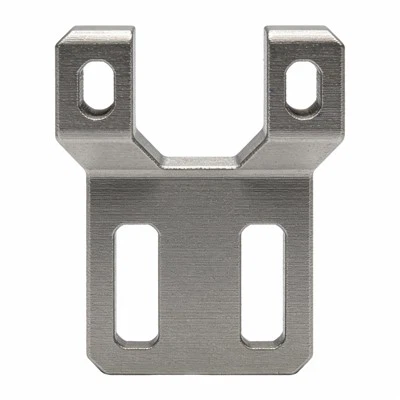
If you’ve been struggling with parts that don’t fit, or you’re starting a new project and need to get tolerances right, hit us up to chat. We’ll walk through your design, material choice, and process, and figure out a way to get the parts you need without extra headaches. Don’t let bad tolerance delay your production—let’s work together to get it right.
Sheet Metal Machining References
- Rosato, D. V., & Rosato, M. G. (2004). Injection Molding Handbook. Kluwer Academic Publishers.
- Project Management Institute. (2017). A Guide to the Project Management Body of Knowledge (PMBOK Guide) – Sixth Edition. PMI.
- American Society for Metrology (ASM). (2019). Measurement Techniques for Precision Plastic Components. ASM International.
- Engineering Properties of Thermoplastics. (2021). Society of Plastics Engineers (SPE).
- Mold Making and Tooling Handbook. (2020). National Tooling and Machining Association (NTMA).
Shenzhen Jingcheng Dingyi Forming Technology Co., Ltd.
Address: 1st Floor, Building 3, Huafeng Zhenbao Industrial Park, No.137 Shihuan Road, ShiYan Town, Bao’An District, ShenZhen, PRC
E-mail: 13071475061@163.com
WebSite: https://www.jctop-cnc.com/
