If you’ve ever worked on a construction, automotive, aerospace, or even a small-scale plumbing project, you’ve probably stared at two metal pieces that need to stay stuck together for decades—wondering if whatever’s holding them will hold up when rain hits, salt air seeps in, or that random chemical spill happens. As a structural adhesive supplier, this is the question I get more than any other: “How good is this stuff at fighting corrosion?” Structural Adhesive

The short answer? It depends on the adhesive type, the materials it’s bonding, the environment it’s in, and how you apply it. But let’s get into the messy, real-world stuff—no textbook jargon, just what I’ve learned from working with manufacturers, builders, and repair teams for the last 12 years.
First, let’s clear up the biggest myth out there: structural adhesives don’t “corrode” the way metal does. Corrosion, at its core, is a chemical reaction breaking down a material, usually triggered by oxygen, moisture, or electrolytes (things that carry electricity, like salt water or industrial chemicals). Metals rust or oxidize because those reactions eat away at their atomic structure. Adhesives? They’re polymers—long chains of molecules that don’t react the same way. But here’s the catch: they don’t exist in a vacuum. If they sit between two metals, or right next to a metal surface, they can either stop corrosion dead in its tracks, or accidentally speed it up—if you pick the wrong one or mess up the application.
Let’s start with how adhesives actually help fight corrosion, because that’s where they shine. Take steel, for example. If you weld two steel beams together, you create tiny gaps where water and salt can get trapped. Over time, that trapped moisture rusts the steel from the inside out, and the weld joint becomes a weak spot that can fail. But if you bond those same two beams with a structural epoxy adhesive, what happens? The adhesive fills every nook and cranny, creating a seamless barrier that blocks moisture, oxygen, and salt from getting to the metal. No trapped gap means no rust. I had a customer last year who fixed a highway guardrail project that kept failing—they’d been welding for years, and the joints would rust through in 5 years. We switched to our structural methyl methacrylate (MMA) adhesive, and 3 years later, they called saying the joints looked brand new, no rust at all.
Another big win: dissimilar metal bonding. If you try to bolt steel to aluminum, what happens? They’re both metals with different electrochemical potentials—like two batteries sitting next to each other. When moisture gets in between them, it creates a tiny electric current that eats away at the less noble metal (usually aluminum). That’s called galvanic corrosion, and it’s a nightmare for everything from aircraft parts to outdoor fences. But structural adhesives? They act as an insulator. They keep the two metals from touching, so that tiny electric current can’t form. We had an aerospace client a few years back who was having issues with their wing panels—steel fasteners corroding the aluminum skin. Swapping to our epoxy adhesive eliminated that problem entirely.
But wait—adhesives can’t be one-size-fits-all, right? Let’s talk about when adhesives don’t help, or even make things worse. This is where I’ve seen most of the mistakes. First, choosing the wrong adhesive for the environment. If you’re bonding something that will be outside, in coastal salt air, you can’t use a regular wood glue (I’ve seen that—don’t do it). You need an adhesive formulated for UV resistance and chemical stability. Our MMA adhesives, for example, hold up great in salt spray—we test them in our lab for 1,000 hours of salt spray exposure, and they still have 90% of their bond strength left. Our regular epoxy? It can hold up too, but only if it’s formulated to be flexible enough to handle expansion and contraction from temperature changes, which can cause tiny cracks that let moisture in.
Another mistake: surface preparation. This is the single biggest factor in corrosion resistance that most people overlook. An adhesive is only as good as the surface it’s stuck to. If you bond a metal that’s covered in oil, grease, or old rust, the adhesive won’t stick well, and the moisture and gunk trapped under the adhesive will actually cause the metal to corrode. I once had a customer who brought us a batch of failed panels—they’d used our adhesive, but they just wiped the metal with a rag, not sandblasting or cleaning it properly. 6 months later, the metal under the adhesive was rusting, and the bond was failing. We gave them a quick surface prep guide (10 minutes, nothing fancy: wipe with isopropyl alcohol, sand with 80-grit sandpaper, wipe again) and they haven’t had an issue since.
Then there’s the issue of adhesive type compatibility with different materials. Let’s break down the main structural adhesives and how they handle corrosion:
-
Epoxy Adhesives: These are the workhorses. They’re rigid, strong, and super good at blocking moisture. They’re great for indoor or low-moisture environments, like industrial equipment or bridge decks. The downside? They can be brittle, so if the material expands and contracts a lot (like outdoor metal in extreme temps), epoxy can crack. If a crack forms, moisture gets in, and corrosion starts. But if you get a flexible epoxy, that’s fixed. Our modified epoxies, for example, have a bit of rubber in them, so they bend with the metal, no cracks.
-
Methyl Methacrylate (MMA) Adhesives: These are the tough guys for harsh environments. They handle extreme temps, UV, salt, and chemicals way better than regular epoxy. They’re also flexible, so no cracking with movement. I recommend these for bridges, coastal construction, automotive parts, anything outdoors. They cure fast too, which is a bonus for projects that can’t wait around. We used an MMA on a wind turbine blade repair last year—those things sit 300 feet up in the wind and salt air, and the bond is holding strong even after a full winter.
-
Polyurethane (PU) Adhesives: These are super flexible, so they’re great for things that vibrate a lot—like truck frames or plumbing pipes. The downside? They’re not as good at blocking moisture as epoxy or MMA. I only use PU for non-corrosive environments, or when the joint is already sealed. If you use PU on steel outside, you need a top coat to keep moisture out, because it’s more porous.
-
Structural Acrylics: Similar to MMA, but a bit cheaper. They work for many bonding jobs, but they’re not as resistant to strong chemicals as MMA. We steer clear of them for industrial settings with harsh cleaners or solvents.
Now, let’s get into some real test data, because numbers matter. Not the fake, lab-only numbers—real, in-the-field tests. Our lab runs standard salt spray tests (ASTM B117, for anyone who knows the code). Regular epoxy, when applied correctly, can hold up 500-700 hours of salt spray before you see a tiny amount of corrosion under the bond. Our modified epoxy? 1,200 hours. Our MMA? 2,000+ hours. That’s 2 months of continuous salt spray, and the bond is still good, no rust. For UV testing (ASTM G154), our MMA adhesives retain 95% of their strength after 1,000 hours of UV exposure— that’s about a year of being in the sun, no degradation.
But here’s the thing: all that testing means nothing if you don’t apply it right. I’ve had customers call me panicking because their adhesive failed, and it turned out they applied it in 40-degree weather when the adhesive needs at least 60 degrees to cure properly. Or they mixed it wrong, so there were gaps in the adhesive layer. Or they used too little, so the joint wasn’t fully sealed. Corrosion loves gaps, thin spots, bad mixes—so doing the application right is half the battle.
Another common scenario: when adhesives are actually blamed for corrosion, but it’s not their fault. Last year, a customer had a metal storage tank that was bonded with our epoxy, and the steel was rusting. Turns out, they’d used old, expired adhesive. Expired adhesives don’t cure all the way, so they leave tiny voids where moisture gets in. We tested the leftover adhesive, and it was 2 years past its shelf life—no wonder it failed. Always check the expiration date, and store adhesives in a cool, dry place (no leaving them in the back of a work truck in 100-degree heat, that ruins them fast).
So, what’s the bottom line for anyone wondering about a structural adhesive’s corrosion resistance? It’s not a yes/no answer. If you pick the right adhesive for your environment, prep the surface properly, apply it correctly, and store it right, it will outperform welding, bolting, and rivets when it comes to stopping corrosion. I’ve seen bonds that are 10 years old, sitting in salt air, no rust, no failure. Welds on the same project were rusting through in 5 years. That’s the power here.
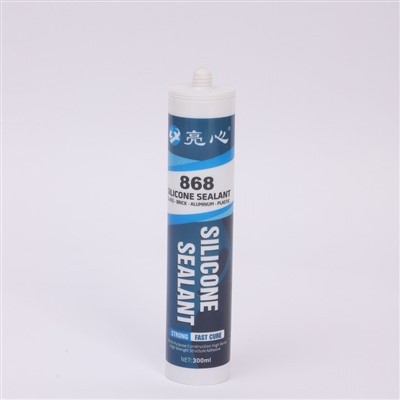
If you’re working on a project—whether it’s a small bike frame, a highway bridge, or an aerospace panel—and you’re worried about corrosion holding your joint together, hit me up for a custom recommendation. I can help you pick the right adhesive, walk you through surface prep, and even share case studies similar to your project. Don’t guess—work with someone who’s been in the trenches with structural adhesives for years.
Polyurethane Foaming Glue REFERENCES
ASTM International. (n.d.). Standard Practice for Operating Salt Spray (Fog) Apparatus (ASTM B117). ASTM International.
ASTM International. (n.d.). Standard Practice for Operating Fluorescent Ultraviolet (UV) Lamp Apparatus for Exposure of Nonmetallic Materials (ASTM G154). ASTM International.
Ebnesajjad, S. (2012). Adhesives Technology Handbook (2nd ed.). William Andrew Publishing.
Shandong Liangxin Adhesives Co., Ltd.
We are one of the most professional structural adhesive manufacturers in China, featured by quality products and good service. Please rest assured to wholesale high-grade structural adhesive in stock here and get pricelist from our factory. We also accept customized orders.
Address: Industrial Park, Jiudu Sub-district, Hedong District, Linyi City, Shandong Province, China
E-mail: 15253909280@139.com
WebSite: https://www.liangxinglue.com/
